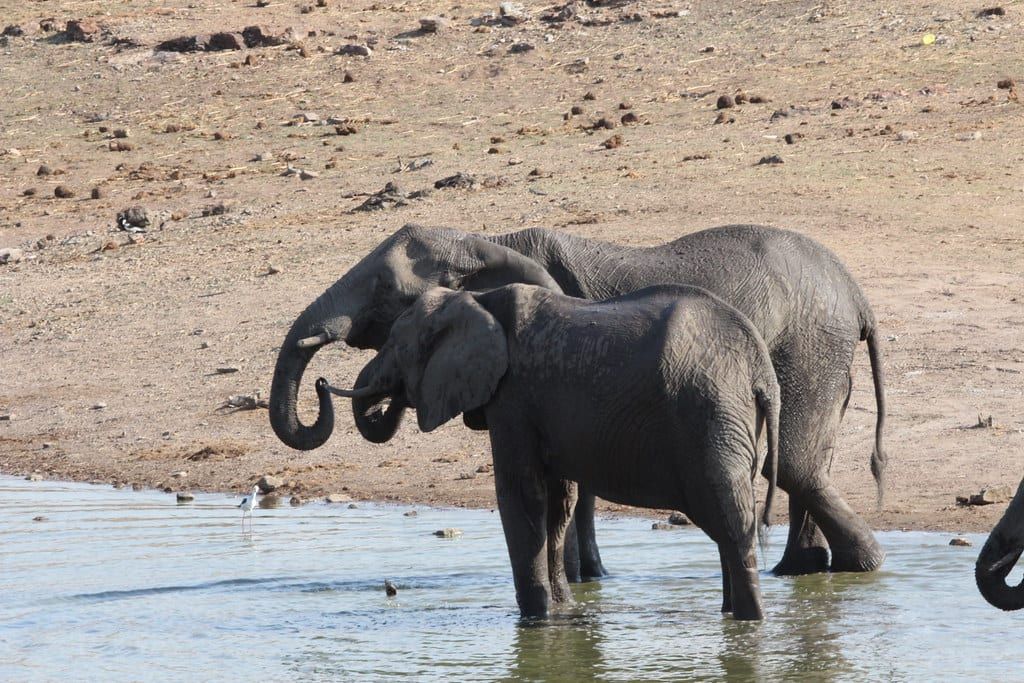
Both parks protect the same unfenced elephant ecosystem on either side of the Zimbabwe–Botswana border, so neither choice is wrong. But they deliver completely different safaris: Chobe is a permanent river with boat cruises, easy day trips and the continent's densest dry-season elephant crowds along the water; Hwange is a riverless wilderness where pumped waterholes, walking safaris and resident wild dog packs draw a fraction of the visitors.
Most people reading this are planning around Victoria Falls, which sits almost exactly between the two. This guide compares them on the things that actually decide the trip — wildlife, crowds, activities, border logistics, costs and timing — and finishes with a verdict by traveler type. We're a Hwange-focused site, so we'll be honest about when Chobe is the better call.
Hwange vs Chobe at a Glance
The short version: Chobe wins on convenience and river drama, Hwange wins on wilderness, dogs and value. Chobe covers 11,700 km² of Botswana in four distinct ecosystems — riverfront, Savuti marsh, Linyanti and the Nogatsaa woodlands — while Hwange, at 14,651 km², is Zimbabwe's largest park. Both hold enormous dry-season elephant populations drawn to their respective water sources, and both sit inside the Kavango-Zambezi (KAZA) transfrontier area with no fences between them, which is why the comparison stays so close.
Pick Chobe if your safari is a 1–2 day add-on to Victoria Falls, if it's your first time in Africa, or if the idea of watching elephants swim across a river at sunset from a boat is the whole point. Pick Hwange if you want to get out of the vehicle, track wild dogs, share a waterhole with nobody else, and spend less doing it — our full Hwange safari planning guide covers that side in depth. If you're also weighing South Africa, see our Hwange vs Kruger comparison.
| Hwange (Zimbabwe) | Chobe (Botswana) | |
|---|---|---|
| Size | 14,651 km² — Zimbabwe's largest park | 11,700 km² across four ecosystems |
| Dry-season elephants | Up to 50,000 at pumped waterholes | ~50,000 along the Chobe River |
| Signature experience | Waterhole hides, walking safaris | Boat cruise on a permanent river |
| Crowds | A fraction of Chobe's, even at peak | Heavy riverfront day-tripper traffic |
| International entry fee | US$24/day (US$12 accommodated) | BWP 270 (~US$20) self-drive |
| Drive from Victoria Falls | 200 km, about 3 hours | 80 km, 1–1.5 hours plus border |
The Core Difference: A Permanent River vs Pumped Waterholes
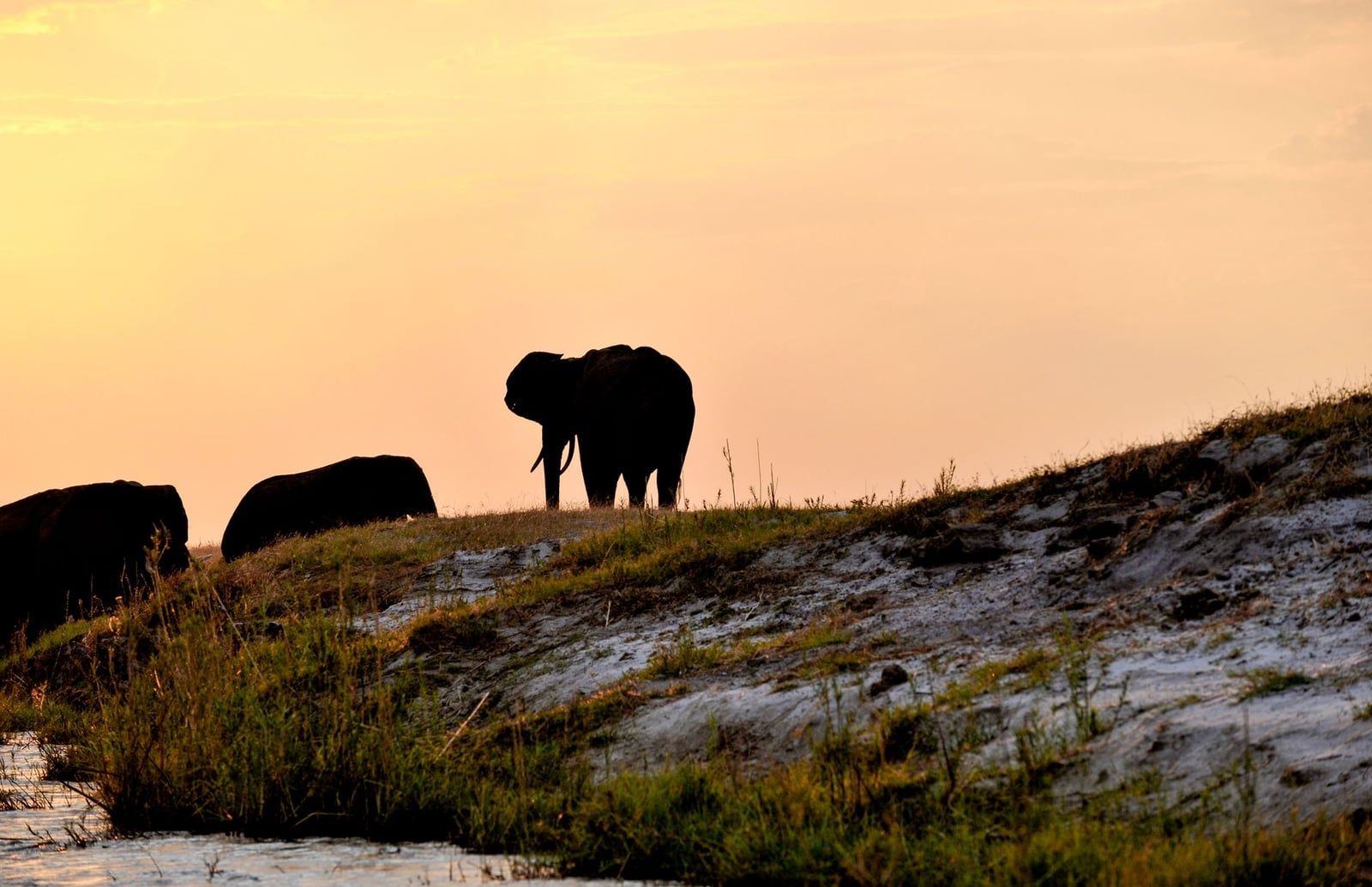
Everything about the two parks flows from one fact: Chobe has a permanent river and Hwange has none. The Chobe River holds water year-round, so in the dry season an estimated 50,000 elephants converge on its banks, and the signature activity is a boat cruise among them. You drift past herds a hundred strong, watch elephants wade and swim between islands, and sit at eye level with hippos and crocodiles. Hwange structurally cannot offer that.
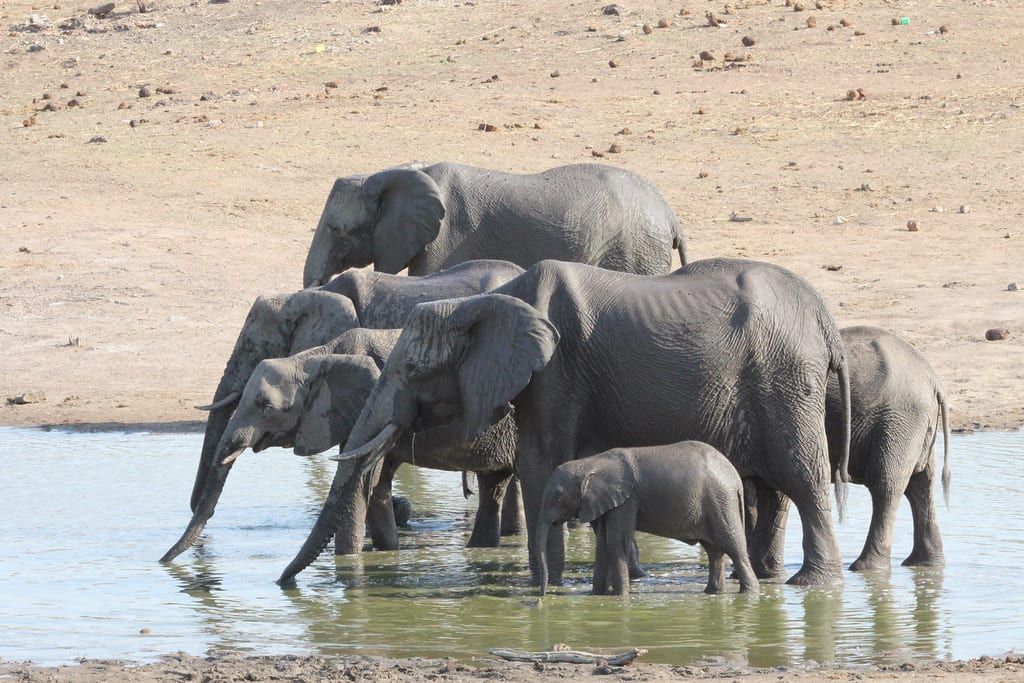
What Hwange has instead is engineering. Decades of boreholes — many now solar-pumped — keep dozens of pans watered through the dry months, and the wildlife knows exactly where they are. It's not unusual to count 200 or more elephants at a single pan at sunset, with buffalo, sable and zebra queueing behind them. Sunken and elevated hides at pans like Masuma Dam and Nyamandhlovu Pan put you at water level while the game walks in around you, and Main Camp's floodlit waterhole runs an all-night show that the park itself describes as one of Africa's great nighttime wildlife theatres — you'll hear elephants drinking in the dark from your bed.
For photographers the choice is between two completely different disciplines. Chobe's boat gives you a low, water-level perspective on moving animals in open light — dynamic but quick, with other boats around. Hwange's hides reward patience: you sit still for an hour, the animals come to you, and the frames are tight and ground-level without a river of other vehicles in them. Neither approach is better; they don't overlap.
Remember that the two parks are connected. Hwange, Chobe and Zambezi National Park all sit inside the KAZA transfrontier conservation area with no fences between them, and elephants move across the borders with the rains. The animals you're comparing are, in a real sense, the same population — more on that in our guide to Hwange's great elephant herds.
Wildlife Head-to-Head: Elephants, Wild Dogs and the Rest of the Cast
Species by species, the two parks trade blows rather than one dominating. Elephants are a tie in different theater, wild dogs break hard for Hwange, and the lion and antelope splits go both ways. Here's the cast in order of how much each one should influence your decision.
Elephants
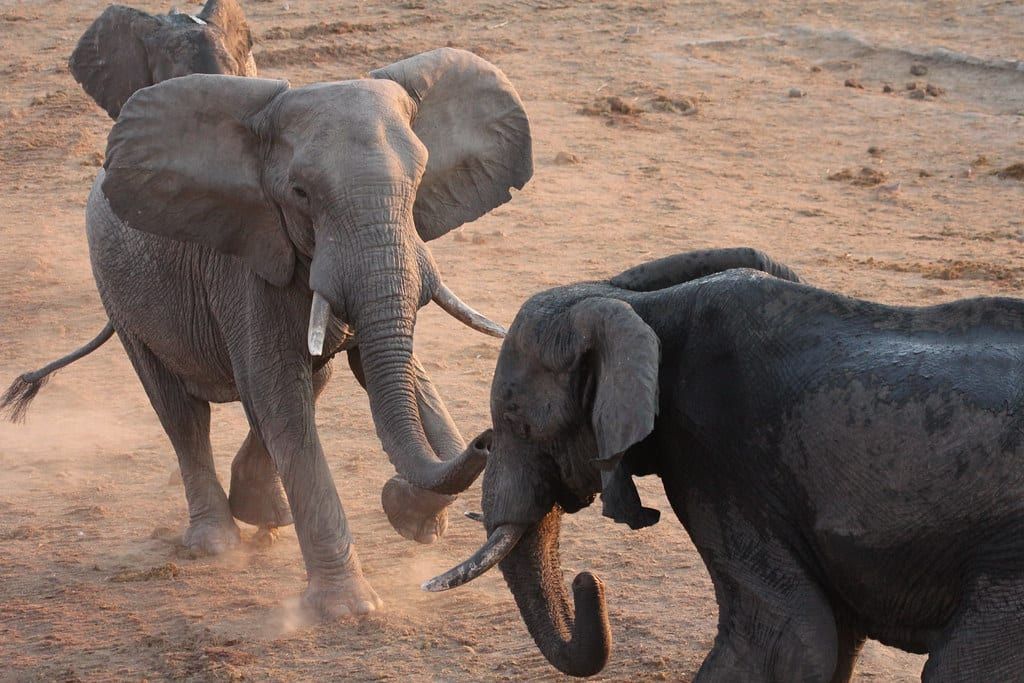
Both parks are world-class, and the numbers are close enough to be a wash: roughly 50,000 elephants gather along the Chobe River in the dry season, and up to 50,000 — around 10% of Africa's total — move through Hwange's pans. The difference is theater. Chobe gives you elephants in and on the water, crossing in long lines with trunks raised. Hwange gives you elephants at close quarters around a shrinking pan, mud-bathing, squabbling over drinking order, sometimes close enough from a hide to hear them breathe.
African wild dogs
This is Hwange's clearest edge. The park holds one of the largest surviving wild dog populations on the continent, with several resident packs regularly encountered, especially in the eastern and central sections during the dry season and around the June–August denning window. Even if the packs elude you, the Painted Dog Conservation centre just outside the park near Dete guarantees a close look at the species. Chobe produces good dog sightings around Linyanti and Savuti, but they're a bonus there, not a headline.
Lions, leopards and cheetahs
Chobe counters with Savuti, whose prides are famous for hunting buffalo — and, in some years, even elephants — with buffalo herds of 1,000 or more on the marsh. Hwange's lions work the waterholes instead; prides of up to 20 hold territory around the busier pans, and the thin dry-season bush makes them easy to find. Leopard occurs in both parks and is a patience game in either. Cheetah favors Hwange's open ground — it's on the park's regular species list alongside giraffe and zebra, and we'd give Hwange the edge there too.
The rest of the cast
Buffalo are strong in both, massive herds in Savuti and regular drinkers at Hwange's pans. Rhinos are present but rarely seen in either park — pair Hwange with Matobo near Bulawayo if rhinos are a priority. The Chobe River Front has two antelope you won't see in Hwange: lechwe and puku, both wetland specialists. Birding runs around 400 species in Hwange against roughly 460 in the Chobe area; both come alive in the green season with migrants, and Hwange's raptor and Kalahari-specialty list is genuinely strong — see our Hwange birding guide for the detail.
Crowds, Activities and Guiding: Busy Riverfront vs Quiet Wilderness
Chobe's riverfront is the most accessible wildlife in the region, and it pays for that. Day-trippers pour in from Victoria Falls, and at a good lion sighting 20-plus vehicles can stack up; once you reach the front of the queue you get about ten minutes before moving on. Hwange receives a fraction of the visitors of Chobe, Kruger or the Masai Mara even in its August–September peak, and the further you push from Main Camp — north to Sinamatella, southwest to Robins — the emptier the tracks get. If solitude matters to you, this section alone decides the question.
The activity gap matters just as much. Walking is not permitted inside Chobe National Park, full stop — you walk only in the private concessions that surround it. In Hwange, guided walks with armed professional rangers are a core part of the experience, and the park has around 800 km of track plus genuine backcountry for self-drivers. Night drives happen on private concessions at both parks rather than inside national-park rules. Zimbabwean guides, meanwhile, are widely regarded as among the best qualified in the region — the professional guiding exam is famously demanding — and the difference shows in how much a Hwange walk or drive teaches you.
One honest note in Chobe's favor: it's the safer bet medically. Kasane, the gateway town, has clinics, and help is close. Hwange's on-site care is basic first aid at Main Camp; anything serious means a 90-minute drive to Victoria Falls or four hours to Bulawayo. That's a reason for solid evacuation insurance anywhere in the region, and especially at Hwange's remote camps.
Getting There: Victoria Falls Logistics, Border Crossings and Day Trips
Both parks route through Victoria Falls, which is why most itineraries base there. Kasane, Chobe's gateway town, is about 80 km away — allow 1.5 hours for the transfer including border formalities at Kazungula, the single crossing point where Zimbabwe, Botswana, Zambia and Namibia meet on the Zambezi. Hwange's Main Camp is roughly 200 km on a surfaced road, about 3 hours' drive, or a 25–60 minute charter flight to airstrips at Main Camp or Robins. Full transport options are in our guide to getting to Hwange.
The border itself is usually quick — formalities can take around 20 minutes — but queues at Kazungula vary with truck traffic and tour groups, so buffer the transfer. The paperwork is the part people miss: if you're a foreign passport holder leaving Zimbabwe for Chobe and coming back the same day, you need either a KAZA UNIVISA (US$50, covers Zimbabwe and Zambia for 30 days, buy on arrival at major crossings) or a double-entry Zimbabwe visa. Without one of those, re-entering Zimbabwe means buying a new visa.
| Chobe day trip | Hwange full-day safari | |
|---|---|---|
| Cost per person | From ~US$180–200 | ~US$270–350 |
| Travel each way | ~80 km / 1–1.5 h plus border | ~200 km / about 3 hours |
| Border crossing | Kazungula both directions (UNIVISA or double-entry visa needed) | None — domestic road |
| What's included | Game drive, ~3-hour river cruise, lunch, transfers | Full day of game drives in the park |
| Worth it? | Yes — a genuine, satisfying day out | Only if you can't overnight; it's a very long day |
The math is clear. A Chobe day trip delivers a real safari — drive plus a three-hour cruise — and you're back in Victoria Falls for dinner. Hwange as a day trip means six hours on the road and missing the dawn and dusk hours when the pans are at their best; our advice is to book it as an overnight. How many nights? Two to three per park is the practical minimum, and organized tours from Victoria Falls handle both parks on one booking.
Costs and Where You'll Stay
Park fees first, with a caveat: published figures genuinely conflict across sources, so confirm before you travel. The current ZimParks tariff lists Hwange at US$24 per international day visitor per day, dropping to US$12 if you're staying overnight inside the park, plus US$10/day for a foreign-registered vehicle. Chobe charges international self-drivers around BWP 270 (~US$20) per adult per day plus roughly BWP 115 for a foreign vehicle, with lodge guests paying about BWP 190 — older sources cite much lower figures, so check the current Botswana tariff before booking.
Accommodation geography is the hidden cost decision. Most Chobe lodging sits in Kasane town, outside the park — day visitors are out by 6 pm, so Kasane-based guests miss the best wildlife hours unless they book Chobe Game Lodge, the only hotel inside the park, or a mobile camping safari that sleeps in the bush. Ngoma and Muchenje lodges sit on western private concessions as quieter alternatives. Hwange inverts this: its prime lodges sit inside the park on large private concessions overlooking productive waterholes, ZimParks runs self-catering rest camps at Main, Sinamatella and Robins for the budget route, and lodges just outside the park are cheaper but sit on marginal ground. Location choices matter enough that we wrote a separate where-to-stay-in-Hwange guide.
On price, the headline: at the luxury end, an all-in day in Hwange runs roughly US$700 versus about US$1,500 in Chobe — comparable wildlife at roughly half the cost. The full range at both parks spans campsites at US$15–20 a night to US$1,500–2,000 top-tier lodge nights, with Hwange's ZimParks chalets (from around US$35) and picnic-site camping filling out an unusually cheap middle. If budget is a real constraint, Hwange wins outright.
Best Time to Visit Each Park (Plus Health and Safety Notes)
Both parks run on the same calendar, which simplifies planning: the dry season from May to October is best at both, with July to October the peak as animals mass at permanent water and the vegetation thins. September and October are the most spectacular months — that's when hundreds of elephants crowd a single Hwange pan and the Chobe River banks are packed — but October is also the hottest, passing 40°C at Hwange and running 30–38°C at Chobe. May and June are the shoulder sweet spot: cooler, cheaper, quieter, and June–August brings Hwange's wild dog denning season with it. The seasonal detail is in our month-by-month guide.
The green season, November to April, splits the decision. Birding is superb at both parks, calving season brings predators into play, and rates drop — but game disperses away from the river and waterholes, thick bush hides everything, and some Hwange roads become impassable. Avoid Hwange in January–March unless birds are the whole mission; Chobe's riverfront holds its residents better and stays workable year-round.
Health notes apply equally. Both parks are year-round malaria zones — take prophylaxis, use repellent, cover up at dawn and dusk, and carry evacuation insurance. Risk peaks November–March. The practical difference is backup: Kasane has clinics nearby, while a serious problem at Hwange means a 90-minute transfer to Victoria Falls, so the insurance matters more there.
The Verdict: Which Park for Which Traveler
Here's the honest split, persona by persona — and yes, from a Hwange-focused site, Chobe wins several of these.
- One or two spare days at Victoria Falls: Chobe. The day trip works; Hwange's doesn't.
- First safari, guaranteed drama: Chobe. Fifty thousand elephants at a river doesn't miss.
- Wild dogs, cheetah and walking safaris: Hwange, without argument.
- Photographers: boats and river crossings mean Chobe; hides and waterholes mean Hwange.
- Solitude and wilderness feel: Hwange, even in peak season.
- Tight budget: Hwange — roughly half the luxury-tier cost for comparable game.
Families and mixed groups land on convenience versus crowd tolerance. Chobe's short transfer, boat option and town infrastructure make it the easier trip with kids or reluctant travelers; Hwange suits a group that will trade an extra hour in the car for an empty park. December's heat, cold August mornings on open vehicles and minimum-age rules at many lodges are worth checking either way.
And if you have five or more days, stop choosing. The classic circuit — Victoria Falls as the hub, 2–3 nights on the Chobe River, then 2–3 nights at Hwange's waterholes — gets you the boat safari and the wilderness in one trip, with no hard trade-off. Most itineraries converge on exactly this, and it's the itinerary we'd book.
Frequently asked questions
Which is better, Hwange or Chobe National Park?
Neither is universally better. Chobe wins on the boat safari, the highest elephant concentration at a permanent river, and easy Victoria Falls access; Hwange wins on wild dogs, solitude, walking safaris and value. The real choice is boat versus waterhole and convenience versus wilderness — and many travelers combine both via Victoria Falls.
Which park has more elephants?
The numbers are effectively tied: an estimated 50,000 elephants gather along the Chobe River in the dry season, and up to 50,000 — roughly 10% of Africa's total — move through Hwange, drawn to its pumped waterholes. The populations are connected, since the parks share unfenced corridors in the KAZA transfrontier area.
Can I visit both Hwange and Chobe in one trip?
Yes, and it's the standard southern Africa circuit. Victoria Falls acts as the hub; a common split is 2–3 nights in Chobe for the river and boats, plus 2–3 nights in Hwange for the waterholes, wild dogs and walking.
Can you do Chobe as a day trip from Victoria Falls?
Yes. It's about 80 km / 1–1.5 hours each way including the Kazungula border, and day packages from around US$180–200 cover transfers, a game drive, a roughly 3-hour river cruise and lunch. You'll need a KAZA UNIVISA (US$50) or a double-entry Zimbabwe visa to re-enter Zimbabwe the same day.
Is Hwange worth the longer transfer from Victoria Falls?
For solitude, wild dogs, walking safaris and lower prices, yes. It's roughly 200 km / 3 hours by road, or a short charter flight to in-park airstrips. But plan at least one overnight — an organized Hwange day trip (US$270–350) is a very long day that misses the dawn and dusk hours.
What are the park entry fees for Hwange and Chobe?
The current ZimParks tariff lists Hwange at US$24 per international day visitor (US$12 for guests staying overnight in the park), plus about US$10/day for a foreign vehicle. Chobe charges international self-drivers around BWP 270 (~US$20) per adult per day, with lodge guests paying about BWP 190. Published figures conflict between sources, so confirm both tariffs before you travel.
When is the best time to visit Hwange or Chobe?
Both peak in the same dry-season window, July–October, when wildlife masses at permanent water and vegetation thins. September–October are the most spectacular but hottest months — Hwange can exceed 40°C in October. The green season (November–April) brings superb birding and low rates, but game disperses and some Hwange roads become impassable.
Which park is better for African wild dogs?
Hwange, clearly. It holds one of Africa's largest wild dog populations, with several resident packs regularly seen — especially in the eastern and central sections during the dry season, and around the June–August denning period. Chobe offers good sightings around Linyanti and Savuti, but wild dogs aren't its headline draw.