Hwange and Kruger sit at opposite ends of the safari spectrum, and the choice between them comes down less to wildlife quality than to how you want to spend your days. Kruger delivers dependable Big Five sightings on roads you drive yourself, supported by rest camps with fuel, shops and restaurants. Hwange delivers elephants in numbers Kruger cannot touch, at waterholes where your vehicle is often the only one there.
Both parks are elite game-viewing destinations, both are malaria zones best visited in the dry season, and both reward repeat visits. Here is the honest head-to-head, with the numbers most comparisons skip.
Hwange vs Kruger at a Glance: Quick Verdict & Head-to-Head Table
Pick Hwange if elephants, wild dogs, walking safaris and empty waterholes are your priority, and you're happy with a guided, camp-based trip. Pick Kruger if you want all five of the Big Five, the independence of driving yourself, or a first safari with every logistical safety net in place. Neither is the "better park" — they are different products, and the table below shows exactly where each one wins.
| Head-to-head | Hwange | Kruger | Winner |
|---|---|---|---|
| Size | 14,651 km² | 19,485 km² plus adjacent private reserves | Kruger |
| Elephants | Roughly 44,000–45,000, up to 50,000 in the dry season | About 12,000 | Hwange |
| Big Five | Four — no rhinos in the main reserve | All five, including black and white rhino | Kruger |
| Wild dogs | 30+ packs, one of Africa's largest populations | Present but far harder to find | Hwange |
| Annual visitors | A tiny fraction of Kruger's total | Just under 2 million | Hwange |
| Self-drive | Main roads only; no fuel or supplies inside | Full tar-and-gravel network with stocked rest camps | Kruger |
The two parks also share a lot. Both are vast dry-season savanna reserves with strong lion and leopard populations, both are best between April and October, and both sit in malaria zones that demand the same precautions. The differences are about scale, crowds and infrastructure.
Choose Hwange if you want:
- Elephants in their hundreds at a single pumped pan
- Wild dogs — 30+ packs den here every year
- Walking safaris with armed guides
- Photography from waterhole hides, alone
- Night drives for aardwolf and brown hyena
The honest downsides: there are no rhinos inside the reserve, no fuel or shops anywhere in the park, and the experience is strongly seasonal — visit outside the July–October window and the game spreads out fast.
Choose Kruger if you want:
- All Big Five, with both rhino species
- Self-drive independence on good roads
- A first safari with full infrastructure
- Campsites from about $25 a night
- Year-round reliability, whatever your dates
The honest downsides: Kruger takes just under 2 million visitors a year since the post-pandemic rebound, and a leopard on a southern road can draw a queue of dozens of vehicles. In peak school holidays, you'll share the park — a lot of it.
Location, Access & How to Combine Both Parks
Hwange sits in northwestern Zimbabwe along the Botswana border, roughly halfway between Victoria Falls and Bulawayo. Almost everyone flies into Victoria Falls International Airport, then covers the 200 km of tar to Main Camp in about three hours — a transfer any vehicle can handle, potholes permitting. Charter flights cut that to 25–60 minutes, landing at serviced airstrips at Main Camp and Robins Camp with prior permission. Coming from Bulawayo, the drive is about four hours, and the overnight Bulawayo–Victoria Falls train will drop you at Dete station, 20-odd kilometres from the gate, for around $8 in economy.
Kruger runs along South Africa's northeastern border with Mozambique. Its southern gates are about five hours' drive from Johannesburg, or you can fly — there are connecting flights to Skukuza Airport and Kruger Mpumalanga International, and the gate network means you can enter and exit wherever your route suits. For full detail on routes and transport, see our guide to how to get to Hwange, which covers the Zimbabwean side of the same planning problem.
For international travellers, Johannesburg is the easier and usually cheaper gateway, with far more direct long-haul service. Victoria Falls normally requires a regional connection — often through Johannesburg anyway — which adds cost and a stop. Budget accordingly.
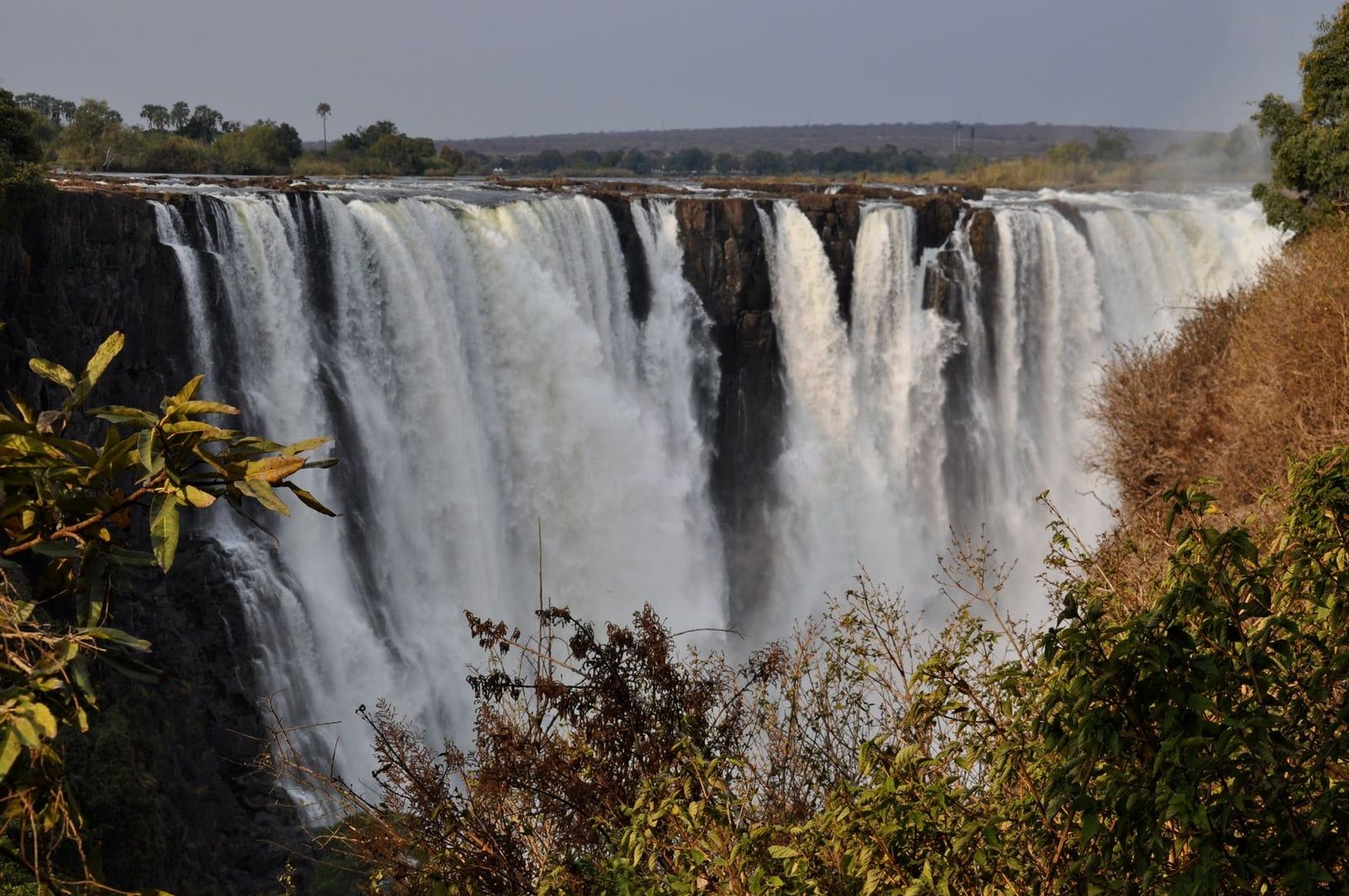
And yes, you can do both. The flight between Johannesburg and Victoria Falls takes about 90 minutes, which makes a 10–14 day dual-park itinerary entirely realistic: Kruger or Sabi Sands first, then Hwange, with two or three days at Victoria Falls between them for white-water rafting on the Zambezi, the bungee jump off the old bridge, or a helicopter flip over the falls. Plenty of operators run safaris from Victoria Falls into Hwange, so the Zimbabwe leg needs almost no separate planning.
Wildlife: Big Five Reliability vs Elephant Super-Herds
The wildlife case splits cleanly: Kruger for checklist completeness, Hwange for spectacle. One park gives you everything on the list; the other gives you a few species in concentrations you won't see anywhere else in the region.
Big Five: Kruger's guarantee
Kruger is the park that ticks the box. Lion, leopard, elephant, buffalo and both rhino species are all reliably present — seeing all five in a single day is genuinely possible — and the park lists 147 mammal species plus more than 400 adult cheetahs. Leopard viewing is the standout, especially in the adjacent Sabi Sands private reserve, where habituated leopards and off-road driving produce sightings most parks can only envy.
Hwange is a Big Four park, and it pays to know that before you book. ZimParks itself lists lion, leopard, elephant and buffalo; the rhinos live outside the main reserve under the Community Rhino Conservation Initiative, protected on community land rather than roaming free in the park. If rhinos matter to you, pair Hwange with Matobo National Park near Bulawayo, where you can track white rhinos on foot with rangers.
Elephants: Hwange's super-herds
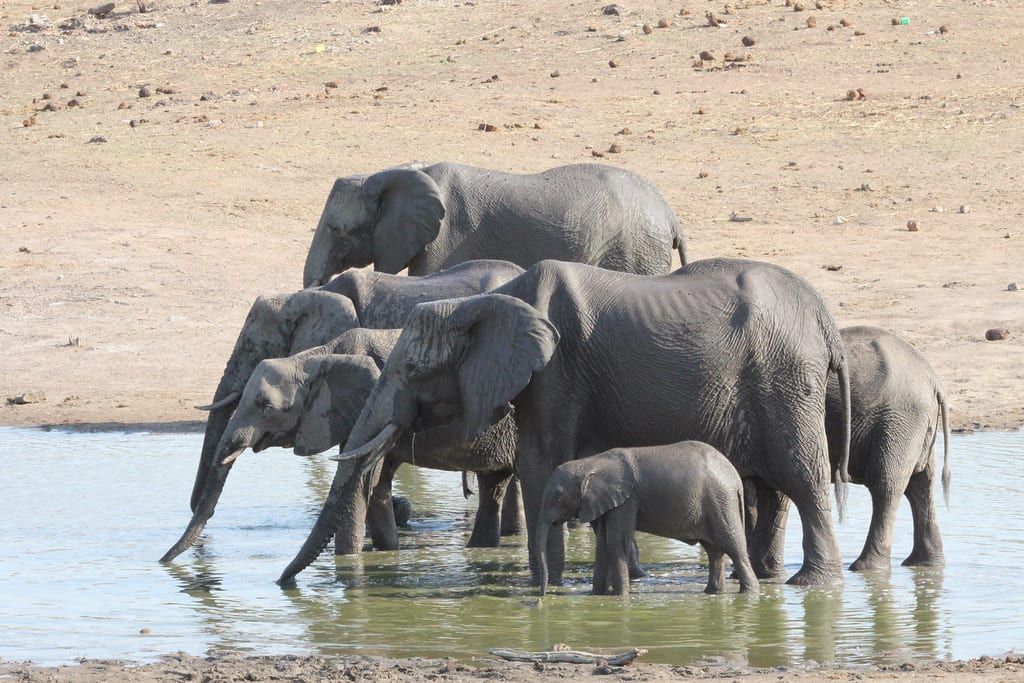
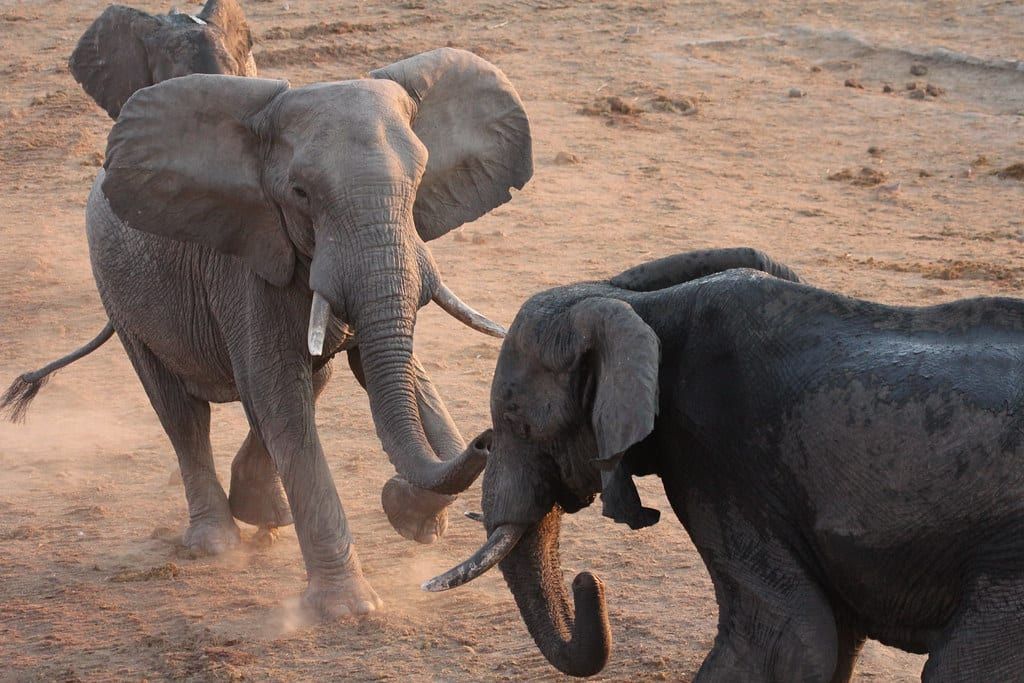
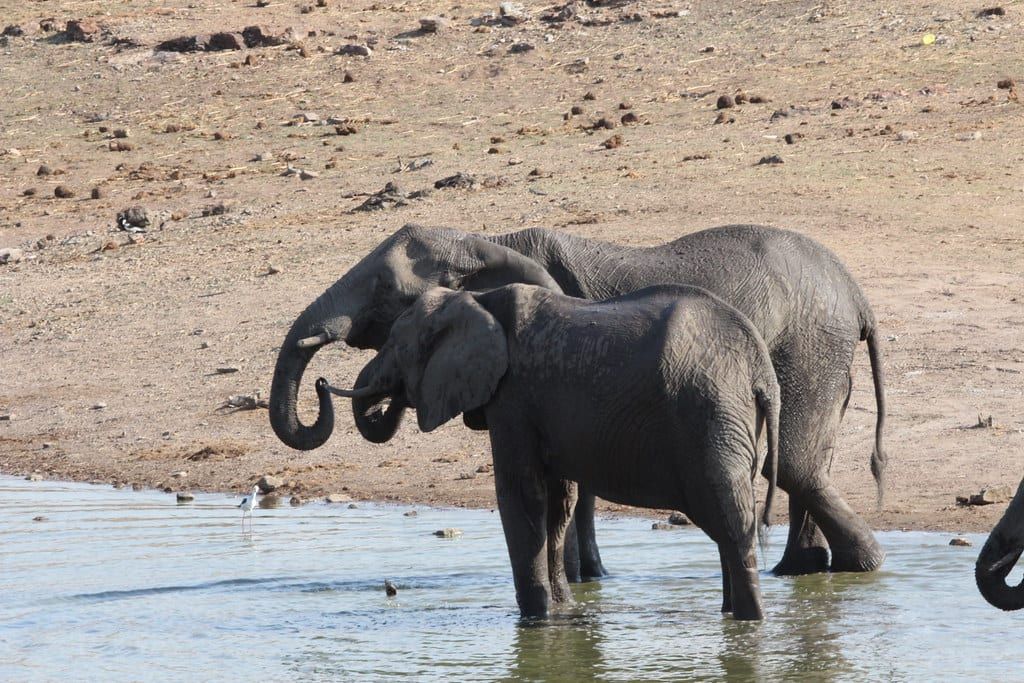
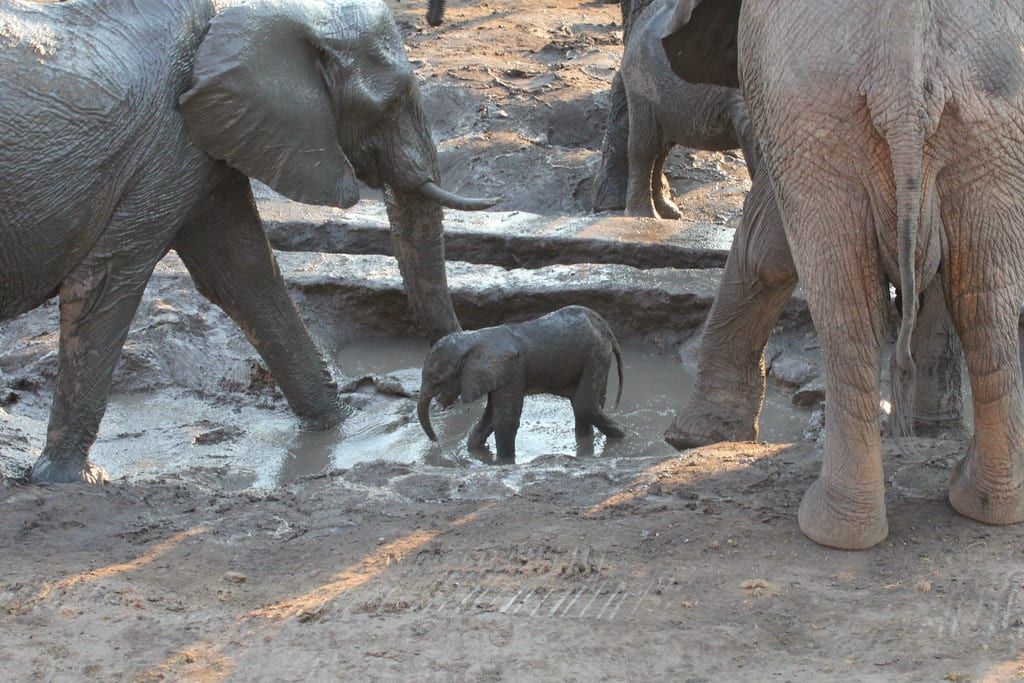
Hwange holds roughly 44,000–45,000 elephants, swelling toward 50,000 in the dry season — about a tenth of Africa's entire population and the second-largest herd on Earth after Botswana's Chobe. Kruger has around 12,000. The numbers only tell half the story, though: the mechanism is what makes it special. Hwange lies on Kalahari sands with almost no permanent surface water, so a network of pumped boreholes keeps wildlife alive through the dry months. From July to October, and especially in September and October, hundreds of elephants gather at a single pan in the midday heat — Nyamandhlovu Pan and Masuma Dam are the classic stages. Our guide to Hwange's elephant gatherings covers where and when to position yourself.
If comparing elephant giants appeals, it's also worth reading how Hwange compares with Chobe — same ecosystem, very different experience.
Wild dogs, rare antelope and birds
African wild dogs are Hwange's second trump card. More than 30 packs hunt here, one of the continent's healthiest populations, and sightings improve during the June–August denning season. Miss them on drive and the Painted Dog Conservation centre just outside the park near Dete guarantees a close look at the species while backing anti-poaching work. Kruger has wild dogs too, but finding them takes considerably more luck.
Hwange also wins the rare-antelope tiebreak: sable, roan and gemsbok are all regular here — gemsbok occurs nowhere else in Zimbabwe's protected areas — while all three are uncommon in Kruger. Kruger answers with sheer breadth: 147 mammal species against Hwange's 100-plus, and more than 500 bird species including Pel's fishing owl in the Luvuvhu region. Hwange's 400-plus birds peak at waterholes like Mandavu Dam, where waterbirds concentrate in the dry months, and the green season adds Kalahari-edge migrants.
The settings differ as much as the species lists. Hwange is Kalahari sand country — teak and mopane woodland over deep sands, flat and dry. Kruger is Lowveld river country, with mopane and savanna threaded along perennial rivers that pull game into linear viewing corridors. Neither scenery is "better"; Hwange feels emptier and wider, Kruger greener and more varied.
The Safari Experience: Crowds, Self-Drive & Activities
A day in Kruger runs on your own schedule. You drive the tar and gravel network between rest camps — each with fuel, a shop and a restaurant — stop where you like, and queue where everyone else has stopped. Popular sightings can attract dozens of vehicles; a leopard near Skukuza can look like a car park. The compensation is freedom: with just under 2 million visitors a year spread across nearly 20,000 km², you can still find empty roads by choosing northern sections or travelling outside school holidays. Guided walks, night drives from the rest camps, and even hot-air balloon flights round out the options.
A day in Hwange usually runs on your camp's schedule. Game drives are guide-led, walking safaris with armed rangers are an integral part of the experience, and night drives — permitted only in private concessions — turn up aardwolf, leopard, brown hyena and springhare. The signature activity costs nothing extra: sitting a hide. At Masuma Dam's thatched shelter or the Nyamandhlovu platform, you wait while the game comes to drink, and you may be the only people there. In a full day you might share the park with a handful of other vehicles.
Self-driving Hwange is possible — main roads near Main Camp suit a sedan, and ZimParks camps are cheap — but there is no fuel, no shops and no reliable filling station inside the park. Fill up in Hwange town or Victoria Falls, carry a jerry can, and budget for slow going: internal speeds average 25–30 km/h. Gates open around 6am in summer and day visitors must exit by mid-afternoon, so plan drives around the clock. For most visitors, lodge-based Hwange safari tours deliver far more of the park than a self-drive ever will.
Where You'll Stay: Bush Camps vs Rest Camps & Private Reserves
Hwange's accommodation skews small, waterhole-fronted and all-inclusive. Safari specialists consistently recommend Somalisa Camp, Linkwasha Camp, Camp Hwange and The Hide — intimate operations where rates (roughly $300–1,500 per person per night) cover drives, walks, meals and drinks, and where the lounge deck usually overlooks a busy pan. Budget inventory is thin but real: ZimParks runs simple chalets and campsites at Main Camp, Sinamatella and Robins, with one-bed chalets from about $35. For a fuller run-down, see our guide to where to stay in Hwange.
Kruger has the widest accommodation range of any park in Africa. SANParks rest camps run from campsites at about $25 per person through bungalows and self-catering chalets at $50–200 a night, up to the private lodges of Greater Kruger — Sabi Sands and Timbavati — at $500–3,000 per person per night. That private-reserve premium buys exclusive traversing rights, off-road driving and leopard sightings that border on guaranteed. It also buys crowds of a different kind: shared sightings in the public park versus exclusivity behind the fence.
Photographers should weigh this carefully. Hwange's underground and waterside hides put you at eye level with drinking elephants, unobstructed and engine-off. Kruger's shooting is vehicle-based — productive, but always over a door sill and sometimes over six other vehicles.
What a Safari Costs in Each Park
Kruger is the cheaper park at almost every tier, and the gap widens at the bottom. Two things drive it: South Africa's deep budget inventory, and the flights — long-haul fares into Johannesburg are typically lower than to Victoria Falls, which usually needs a connection. Where Hwange fights back is the middle and upper middle: its best camps undercut equivalent Sabi Sands lodges while delivering a wilder, quieter experience.
| Tier | Hwange (Zimbabwe) | Kruger (South Africa) |
|---|---|---|
| Camping plus park fees | US$23 per site per night plus US$12/day fee for guests staying inside (US$24 for day visitors) | From about US$25 per person plus roughly US$25/day in park fees |
| 4-star comfort | $800–1,200 | $500–550 |
| 4-star luxury | $1,050–1,600 | $600–900 |
| 5-star | $2,900–3,250 | $1,100–1,850 |
| Flights and gateway | Victoria Falls, usually via a connection | Johannesburg, usually cheaper and direct |
Read the entry-level row carefully, because Hwange's official fees are kinder than its reputation suggests: ZimParks' current tariff charges accommodated international guests US$12 per day, half the US$24 day-visitor rate, and international campsites are US$23 per site (up to three people). A self-drive Hwange camping trip is genuinely cheap — it's the lodge market, and the cost of getting there, that pushes the average up. Our Hwange hours and fees page carries the full current tariff breakdown.
When to Go: Dry-Season Windows for Each Park
The calendars overlap, which is the quiet good news of this comparison. Hwange peaks from July to October, when thin bush and the pumped waterholes concentrate everything that drinks — September and October are prime elephant months, when hundreds can mass at a single pan. Days run 25–32°C from July to September, with cold nights down to 4–6°C in August. August and September are the busiest months; June and November are the quieter, cheaper shoulder, and April to September generally brings pleasant weather with fewer vehicles.
Kruger's dry winter runs May to October, and the park works year-round in a way Hwange doesn't — the rivers always hold some game, and the infrastructure doesn't close. Its shoulder logic is similar: outside South African school holidays, you'll have the roads closer to yourself.
From November to March, both parks go green. Prices drop, crowds thin, migrant birds arrive and newborn animals appear — but the bush thickens, game disperses away from water, and spotting gets harder. In Hwange the wet season bites harder: heavy rains make roads genuinely difficult (a 4x4 becomes essential), some lodges close between December and March, and malaria risk peaks. The full monthly breakdown is in our best time to visit Hwange guide. The practical takeaway for a dual-park trip: any date between June and October serves both parks well.
FAQs: Hwange vs Kruger
Hwange or Kruger: which is better for a first-time safari?
Kruger, for most first-timers: nearly 2 million visitors a year are supported by world-class self-drive infrastructure, stocked rest camps and reliable Big Five sightings. Choose Hwange for a first safari only if uncrowded waterholes, 44,000-plus elephants and walking safaris matter more to you than budget options and logistical ease.
Which park has more elephants?
Hwange, decisively. Its roughly 44,000–45,000 elephants — rising toward 50,000 in the dry season — form the world's second-largest population after Botswana's Chobe. Kruger holds about 12,000. In September and October, hundreds of Hwange elephants can gather at a single pumped waterhole.
Which park is less crowded?
Hwange, by a wide margin. Kruger receives just under 2 million visitors annually since the pandemic rebound, and popular sightings can draw dozens of vehicles. In Hwange you can be the only vehicle at a waterhole for hours.
Can you see the Big Five in Hwange?
Not reliably — it's a Big Four park. Lion, leopard, elephant and buffalo are all present, but Hwange's rhinos are protected outside the main reserve under the Community Rhino Conservation Initiative. Kruger holds all five, including both black and white rhino.
Can I self-drive in both parks?
Yes, but unequally. Kruger is built for it: tar and gravel roads plus rest camps with fuel and shops. Hwange allows self-driving on its main roads, but there's no fuel or supplies inside the park, so guided, camp-based safaris deliver most of its best game viewing.
Is Hwange cheaper than Kruger?
Generally no. Kruger averages less per night at every tier (4-star roughly $500–900 per person per night versus Zimbabwe's $800–1,600), and flights to Johannesburg are cheaper. Entry-level camping is comparable, though — Hwange campsites cost US$23 per site plus US$12/day for accommodated guests — and Hwange's luxury camps undercut Sabi Sands pricing.
When is the best time to visit each park?
Hwange peaks July–October, when animals mass at the pumped waterholes; April–September is a pleasant, quieter shoulder. Kruger's dry winter runs May–October and the park works year-round. Both share the April–October dry season overall.
Can I visit both Hwange and Kruger in one trip?
Yes — the Johannesburg–Victoria Falls flight takes about 90 minutes. A 10–14 day itinerary comfortably covers Kruger (or Sabi Sands) plus Hwange, with two or three days at Victoria Falls in between for rafting, bungee or a helicopter flight.