Hwange National Park is Zimbabwe's largest protected area — 14,651 km² of Kalahari sand, teak and mopane woodland in the country's north-west — and it hides one of southern Africa's best bird lists inside its borders. More than 400 species are recorded, the working checklist approaches 500, and roughly 50 of those are raptors. Birders who arrive for the elephants tend to leave talking about the hornbills.
The variety comes straight from the geography. Kalahari sandveld, fossil dunes with vlei grassland, basalt and granite country in the north and somewhere in the region of 40,000 seasonal pans give almost every southern African habitat a foothold here — and every habitat brings its own birds. Add easy access from Victoria Falls, 200 km and about three hours on tar, and you have a park that slots into almost any Zimbabwe itinerary.
Why Hwange Is a World-Class Birding Destination
Few parks of this size sit entirely on Kalahari sands, and that is Hwange's edge. Deep sandy soils carry Zambezi teak, sand camwood and Kalahari bauhinia woodland, mopane dominates the north and north-west, and seasonal vleis open into grassland between ancient dune lines. Roughly 40,000 pans — many pumped through the dry months — thread water through otherwise thirsty country. A birder can work four habitats before lunch.
That mix makes Hwange a genuine stronghold for dry-Kalahari species that sit at the eastern edge of their range, birds you won't find in the region's better-known savanna parks. BirdLife Zimbabwe rates Hwange's protected population of Bradfield's hornbill as probably the highest in the world, and the yellow-billed oxpecker population as probably the highest in the subregion. For a park rarely marketed at birders, those are serious claims.
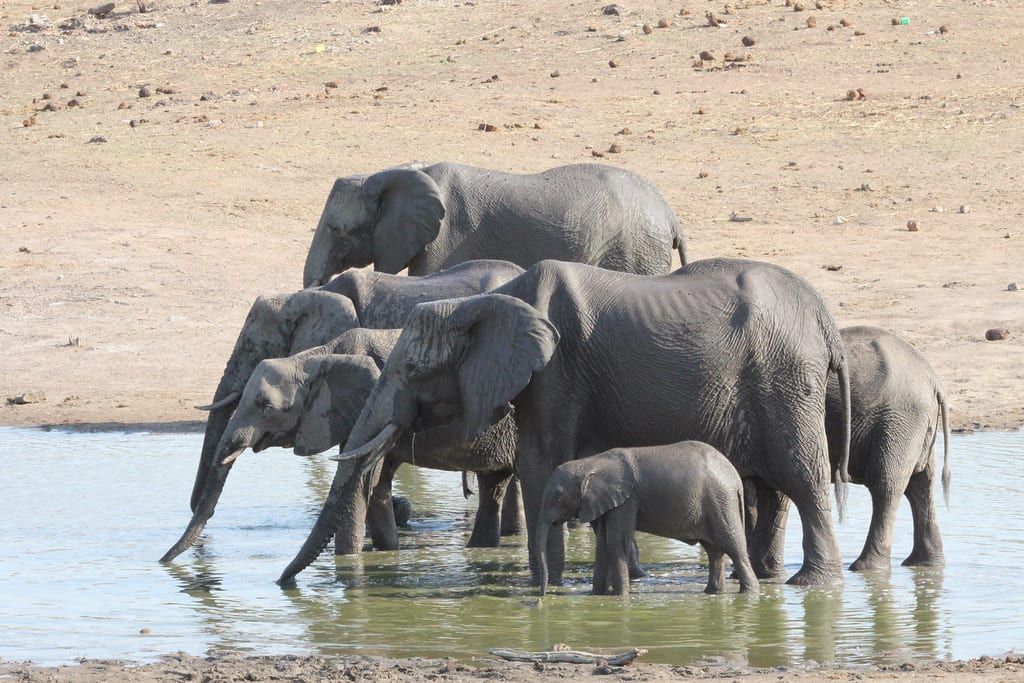
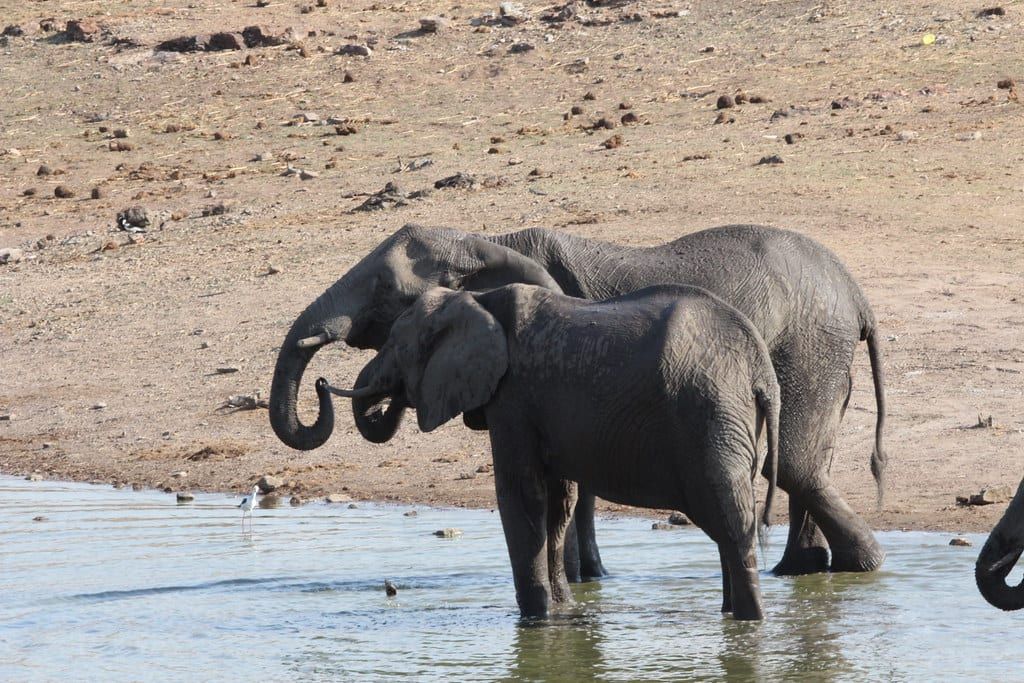
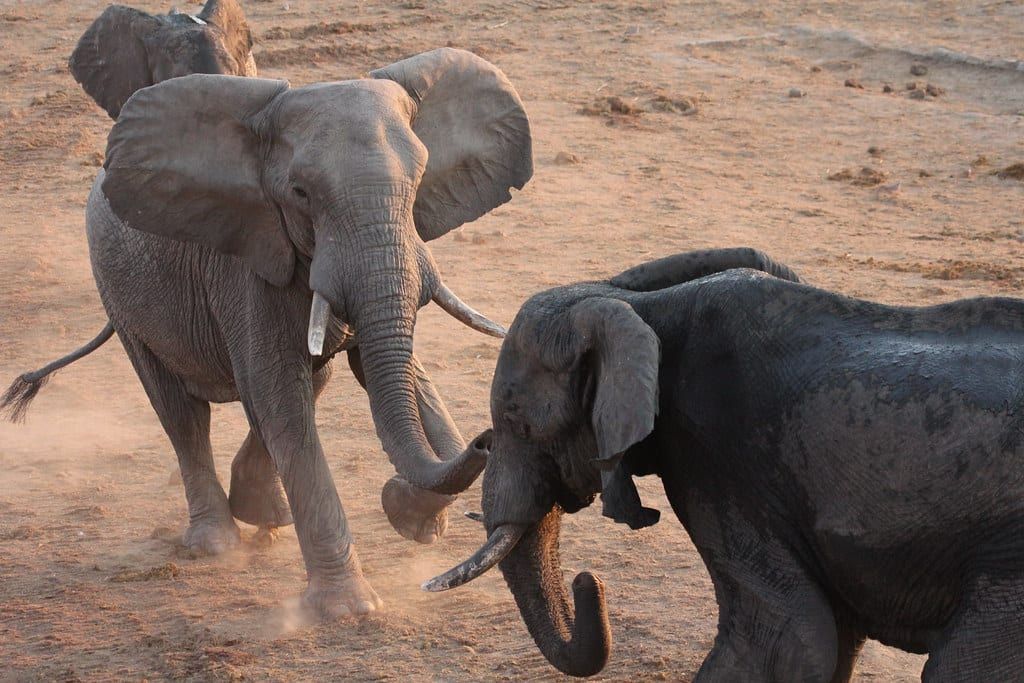
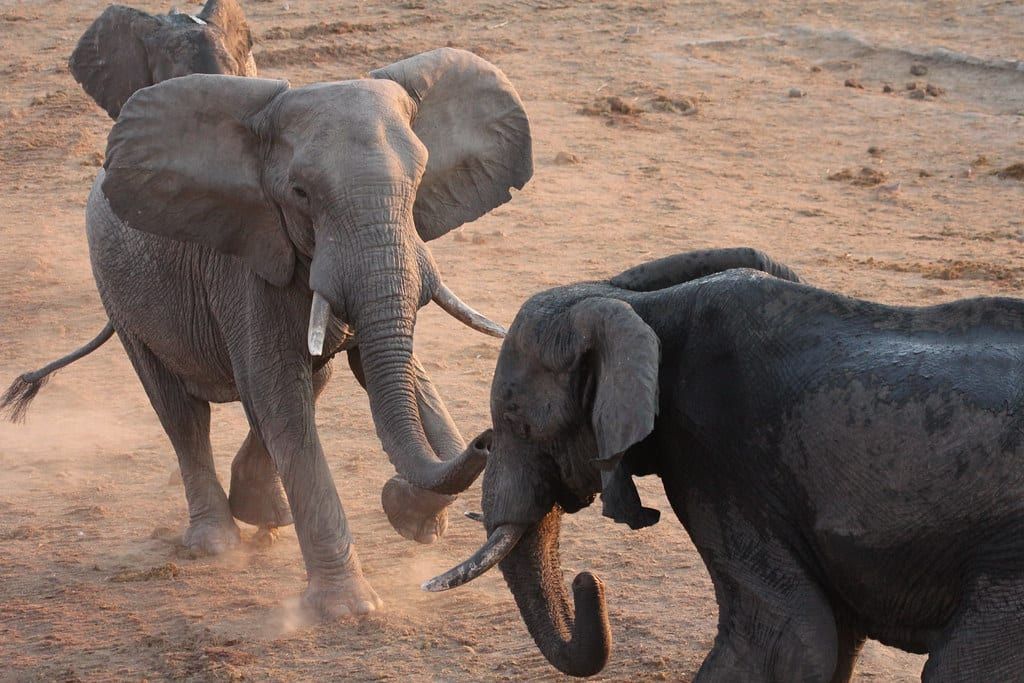
Then there's the bonus: up to 50,000 elephants in the dry season, lions, buffalo and one of Africa's largest African wild dog populations. Scanning a packed waterhole for sandgrouse while breeding herds drink 50 metres away is a normal Hwange morning — our guide to Hwange's elephants covers what those encounters look like. Birding here never means giving up the safari.
Hwange's Signature Birds: What to Target and Where
A flat list of 400 names helps nobody. Better to work by habitat: each group below comes with a where-and-when hint, so you can point the vehicle at the right habitat each morning and build a realistic target list before you fly.
Kalahari and Woodland Specialties
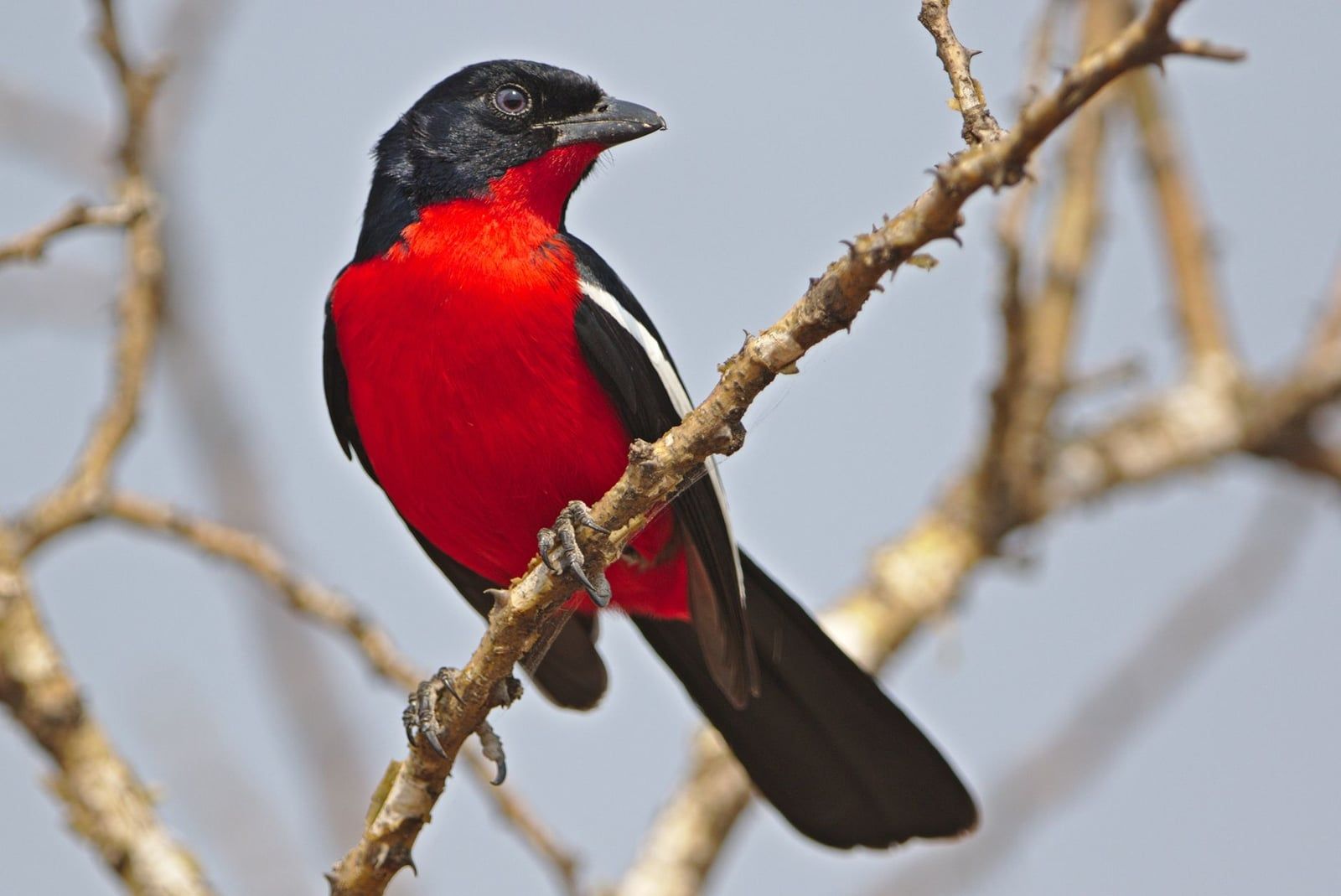
Work the teak and mopane in the first two hours of daylight and the dry-country specials come to you. Bradfield's hornbill is the headline — nowhere else protects so many. Alongside it, look for southern pied babbler, Arnot's chat, Kalahari scrub-robin and the crimson-breasted shrike, a bird so red it looks Photoshopped. Meves's starling, orange-winged pytilia, shaft-tailed whydah and black-faced waxbill work the same bush.
Burchell's sandgrouse belongs on this list too, with a twist: they drink at pans in flocks around mid-morning, so sandgrouse are the one dry-country group best twitched from a waterhole sit rather than a woodland drive.
Grassland Heavyweights
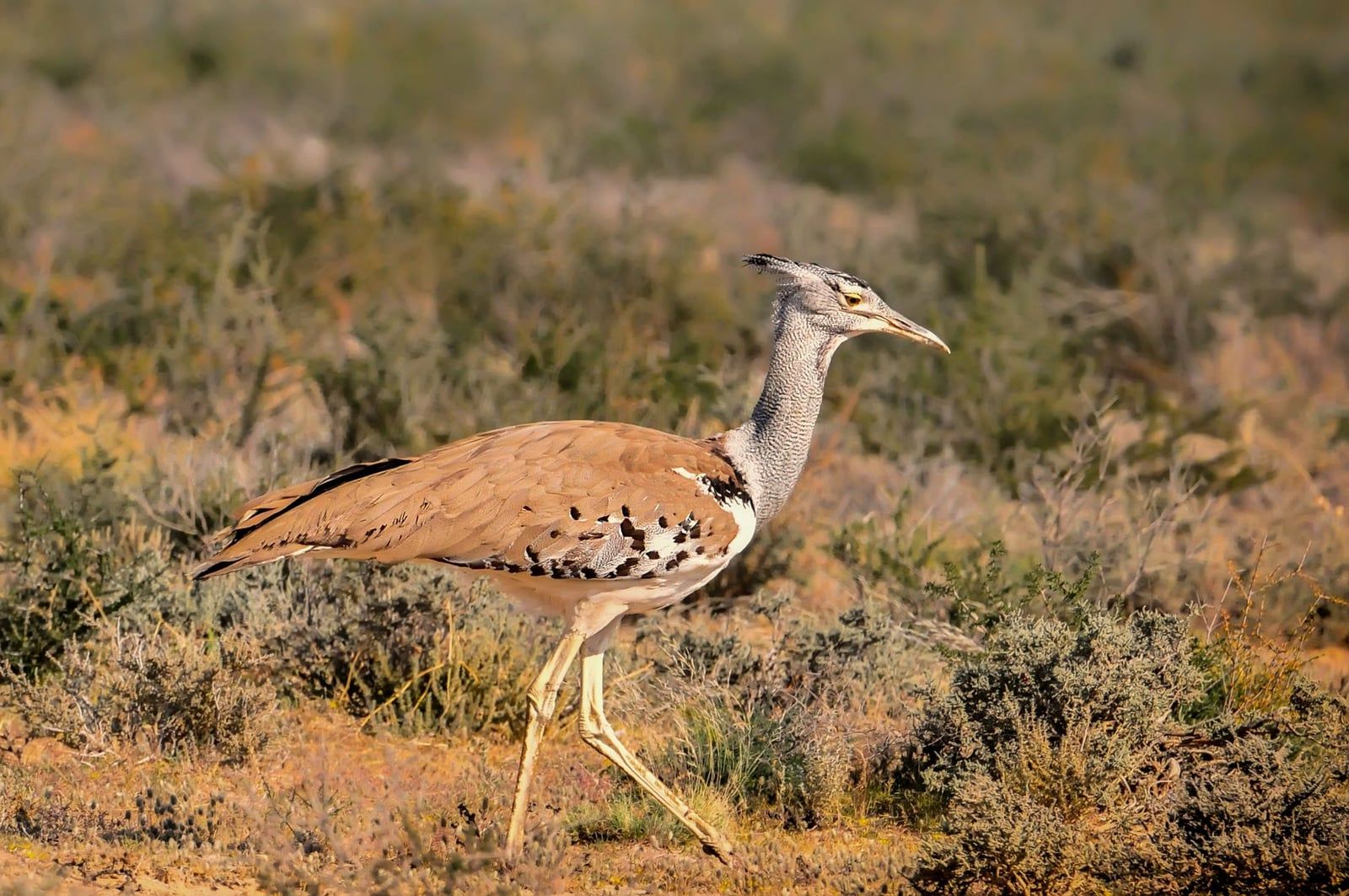
Open vlei grassland and pan edges produce Hwange's biggest birds. Ostrich and kori bustard — Africa's heaviest flying bird — stalk the short grass, secretarybird strides through on long grey legs, and southern ground hornbill parties boom across the plains in the early morning. Red-crested korhaan adds the odd display flight, a vertical tumble that has to be seen to be believed. Scan fencelines and the ecotone between grass and bush; bustards and coursers love an edge.
Raptors: Around 50 Species
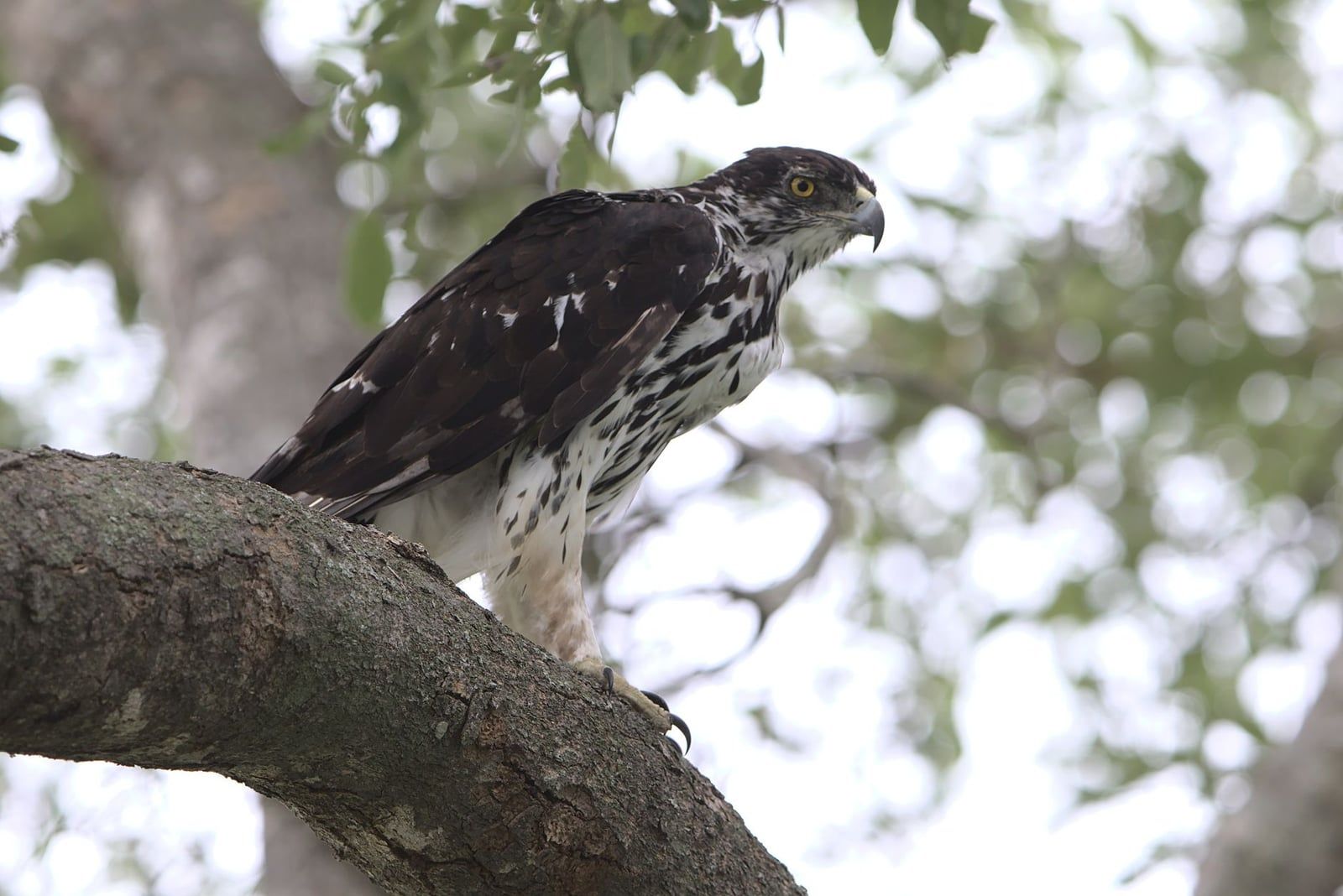
Fifty raptor species is a whole holiday on its own. Bateleur rock in the thermals on a good morning; tawny and martial eagles perch in the tall teak; African hawk-eagles hunt francolin along the woodland edges. Dickinson's kestrel and red-necked falcon favour the palm and mopane country, the southern pale chanting-goshawk runs the drier bush, and both African and Eurasian hobby pass through. Wet-season harriers quarter the green vleis, and at any big predator kill the vultures put on a scrap worth watching for an hour.
Waterbirds at the Pans
With 40,000 pans, waterbird habitat is never far. Herons and egrets are everywhere; saddle-billed and woolly-necked storks work the shallows; Dwarf Bittern, Maccoa Duck and Lesser Moorhen appear when the rains fill the smaller pans; terns and the African skimmer turn up on the bigger water; in some years flamingos arrive in numbers. The specialist prize comes in the rains, when vegetated pans grow just weedy enough to hold Corn, Spotted, Striped and Baillon's crakes — skulkers that repay an hour of patient glassing.
Migrants Worth Timing a Trip Around
The migrants set the calendar. Southern carmine bee-eaters — the ones that nest in riverbank colonies and glow like embers on a branch — arrive with the first rains, alongside European rollers and Amur falcons that have crossed from Asia. Ruff and other Palearctic waders stack up on the pans. All of them fall inside the hot, wet window from mid-November to mid-April, which is exactly why that window is peak season for birders.
Build Your Target List Before You Fly
Three tools do the job. BirdLife Zimbabwe publishes a downloadable Hwange park checklist (updated June 2022), The Hide camp posts a species checklist PDF covering the park, and eBird's Hwange hotspot page shows what's actually been seen recently and in what numbers. Ten minutes with eBird's bar charts tells you instantly whether your must-see bird is realistic in your travel month.
Best Time for a Hwange Birding Safari
Birding is good year-round in Hwange, but November to April is the peak, and the trade-offs between the green and dry halves of the year are real. Zimbabwe's official tourism body and independent safari guides both flag November–April as the birdwatching window, when migrants from Europe and northern Africa arrive and residents nest in bright breeding plumage. For a fuller breakdown of weather and crowds across the year, see our best time to visit Hwange guide.
Green season runs hot and humid — roughly 23–26°C on average with around 44mm of rain a month, usually as afternoon storms. Grass is long, bush is thick, and some roads need a high-clearance 4WD. What you get in exchange is the full checklist: every migrant, every crake-filled pan, dawn choruses you can barely talk over, and lodge rates well below peak.
Dry season, May to October, averages 20–29°C with about 6mm of rain a month. The bird list shrinks, but activity compresses onto the pumped waterholes, roads are passable everywhere, and July to October is the best general wildlife viewing of the year. For birders who also want elephants and predators in the frame, this is your half of the calendar.
| Green season (November–April) | Dry season (May–October) | |
|---|---|---|
| Species on offer | Full checklist — migrants plus breeding residents in bright plumage | Residents and raptors only, no migrants |
| Bird activity | Dawn choruses, nesting activity, crakes at vegetated pans | Activity compressed onto waterholes, mornings and late afternoon |
| Access and roads | Pans full and productive, but some roads need 4WD | All-weather roads, easy driving park-wide |
| Big game | Big game dispersed; thick bush hides mammals | Elephants and predators concentrated at waterholes, July–October |
| Crowds and lodges | Quiet and cheaper, but some lodges close December–March | Peak season August–September; book months ahead |
Month by month, the year looks like this.
| Month | What it adds | Month | What it adds |
|---|---|---|---|
| January | Peak rains; crakes at vegetated pans, Palearctic waders at full strength | July | Mid-dry; raptors busy, waterhole concentrations build |
| February | Wettest stretch; Dwarf Bittern, Maccoa Duck and Lesser Moorhen on filled pans | August | Cold nights, thin grass; bustards, coursers and ground hornbills easy to see |
| March | Rains taper; quelea flocks and lingering migrants | September | Warming days; sandgrouse drinking in flocks at midday |
| April | Migrants leaving; quiet roads, soft light, good value | October | Hot and dry; late-month build-up before the first rains |
| May | Dry season starts; clean, cool woodland birding | November | First rains; carmine bee-eaters and European rollers arrive |
| June | Cool mornings; best birds-plus-big-game combination | December | Full green season; breeding plumage, nesting residents, afternoon storms |
Two caveats. Some lodges close entirely from December to March, so check before building an itinerary around them, and green-season driving on sandy or flooded tracks genuinely requires a 4WD. The compromise window is late October into early November: the dry season's game concentrations are still in place while the first carmine bee-eaters and rollers arrive with the first storms. Birders torn between seasons should start there.
Best Birding Hotspots: Waterholes, Pans and Woodland
Hwange is vast, so where you point the vehicle each morning decides what you'll find. These are the places worth planning around.
Nyamandhlovu Pan
The park's most famous waterhole sits close to Main Camp and comes with a raised viewing platform — a birder's gift, because it puts you above the reed line with a 360-degree view. Storks, herons, waders and sandgrouse rotate through all day, and in the dry months the elephant traffic is constant. Self-drivers can work it at dawn and again in the late afternoon between woodland loops.
Mandavu and Masuma Dams
In the north-west, Mandavu and Masuma dams are the most reliable gathering points for both game and birds, and Masuma has a thatched hide at the water's edge. Book the Masuma picnic site for an overnight if you can — sitting a hide through the full day cycle is how you pick up skulking species and late-drinking sandgrouse that day visitors miss.
Ngamo Pans
The Ngamo pans complex is on the record for waterbirds that are scarce elsewhere in the park, including Cape shoveler and black-winged pratincole. When the pans hold water in the green season, this is where the wader flocks and terns concentrate — pair it with the surrounding grassland for bustards and coursers in the same loop.
Woodland Drives and Grassland Edges
For the Kalahari specials, structure mornings around slow drives through teak and mopane, stopping for every call: hornbills, rollers, barbets, shrikes and the chat-type skulkers are all woodland birds, and they go quiet by mid-morning. Then switch to open ground — pan edges and vlei margins — for kori bustard, ostrich, coursers, pratincoles and lapwings. Habitat edges, where bush meets grass, consistently hold the most birds per kilometre.
Planning Your Hwange Birding Safari: Guides, Drives and Itineraries
A Hwange birding day has a rhythm, and it's worth protecting. Here's what to expect, how long to stay and how the park fits a wider route.
What a Birding Day Looks Like
Camps run activities as 2–3 hour slots across morning, afternoon and evening, moving through different ecosystems on each. Dawn is a drive or a guided walk — walking is where you hear the calls and catch the small birds vehicles roll past. Midday belongs to a hide or pan sit while the mammals come to drink. The afternoon drive turns toward woodland, and where a lodge holds a private concession you can add a night drive for nightjars, owls and coursers. Walks are always with an armed professional guide; Hwange carries elephants, buffalo and lions, and night drives are permitted only on private concessions. If a bird-focused guide matters to you, say so when booking — most Hwange safari tours can pair you with one.
How Many Nights to Book
Three nights is the sensible minimum for a first visit; dedicated listers should plan four to six, because Hwange is enormous and each section holds different habitat. A strong four-night shape: two nights in the Main Camp area working Nyamandhlovu Pan and the woodland loops, a third night up at the north-west dams (Mandavu or Masuma), and a fourth splitting Ngamo's pans and grassland. That single structure touches all four habitat groups on the target list above.
Getting There
Most birders fly into Victoria Falls and drive: 200 km on tar, about three hours, which makes Hwange an easy extension from Victoria Falls rather than a separate mission. From Bulawayo it's 306 km. There are no scheduled flights into the park, but ZimParks maintains serviced airstrips at Main Camp and Robins Camp for charters, with prior landing permission required. Full routes and transport options are in our directions guide. Budget for park costs as you plan: international conservation fees run US$24 per day for day visitors and US$12 for accommodated guests, plus US$10 a day for a foreign-registered vehicle — current figures are on our hours and fees page.
Where to Stay
Two broad choices. Private lodges and concessions bundle guided drives, walks, night drives (where licensed) and waterhole hides into the rate, and a good lodge garden alone can carry 40 species before breakfast. Self-drivers pay less at the ZimParks rest camps — Main Camp, Sinamatella and Robins — and trade the guiding for freedom to sit at Nyamandhlovu all morning if the sandgrouse are playing. Whichever you pick, look for camps that allow early departures and lie close to your target habitats; our Hwange accommodation guide breaks down the options by area and budget.
Extending the Birding Route
Hwange pairs naturally with three add-ons. Victoria Falls itself, three hours away, adds riverine species and the falls. Mana Pools, on the Zambezi, is superb for waterbirds and woodland — but its camps open seasonally April to October, so a Hwange-plus-Mana combination has to sit in that dry window, outside Hwange's best green-season birding. Matobo near Bulawayo brings raptors and granite-endemic species, and Chobe in Botswana — about an hour past Victoria Falls — extends the same elephant-heavy ecosystem across the border. Green-season birders: keep Hwange as the core and add Victoria Falls rather than Mana Pools.
What to Pack and Camera Kit for Birding in Hwange
Binoculars first, and don't economise on them — they are the single item you'll use every minute of every day. Add a southern Africa field guide or a phone app with calls; call playback in the field is worth having even if you only use it to confirm an ID quietly.
Photographers should carry a 300–600mm telephoto, because Hwange's small woodland birds are genuinely small and the light under teak canopy is dim. Spare batteries matter more than you'd expect — cold mornings and long days drain them — as does ample memory. On clothing: neutral colours, a hat and sun protection, plus a warm jacket, beanie and gloves for open-vehicle mornings in June and August, when nights drop to 4–6°C. You will not believe you're in Africa until the sun comes up.
Fieldcraft is simple. Shoot in the soft morning light, use the vehicle as a hide, and allow real time for positioning and waiting rather than chasing the next sighting. And put the bird's welfare ahead of the photograph — never bait with playback at nesting birds or push a skulker for a cleaner view. The crake at the pan edge deserves its space.
FAQs About Hwange Bird Watching Safaris
How many bird species are in Hwange National Park?
More than 400 species are recorded, and the working checklist approaches 500, including roughly 50 raptor species. BirdLife Zimbabwe maintains a downloadable park checklist, last updated June 2022.
When is the best time for a Hwange bird watching safari?
November to April. Migrants from Europe and northern Africa arrive, and residents nest in bright breeding plumage. May to October trades some species for easy access, concentrated waterhole birding and better big game — and some lodges close between December and March.
Which special birds is Hwange known for?
Bradfield's hornbill — Hwange probably holds the highest protected population in the world — plus yellow-billed oxpecker, southern pied babbler, Arnot's chat, Kalahari scrub-robin, crimson-breasted shrike, kori bustard, secretarybird, southern ground hornbill and Burchell's sandgrouse.
How many nights do I need for a Hwange birding safari?
At least three nights for a first visit. Dedicated birders should book four to six, because the park is vast and different sections hold different habitats — the pans, woodland and grassland each need their own sessions.
Do I need a specialist birding guide in Hwange?
It makes a real difference, especially for calls and skulking woodland species. Camps and operators in Hwange provide professional guides as part of standard drive and walking activities, so request a birding specialist when you book.
Can you do walking safaris for birding in Hwange?
Yes, where offered. Guided walks with armed professionals let you hear subtle calls and find small birds a vehicle misses, though walks are always guide-dependent because the park holds elephants, buffalo and lions.
Can I combine Hwange with Mana Pools or Victoria Falls on a birding trip?
Easily with Victoria Falls, which is about three hours away by road. Combining with Mana Pools is the one constraint: its camps open seasonally April to October, so that pairing falls in the dry season rather than Hwange's green-season birding peak.
What equipment should I bring for birding in Hwange?
Binoculars are essential, plus a southern Africa field guide or app. Photographers should bring a 300–600mm telephoto, spare batteries and memory cards, and everyone should pack neutral-coloured clothing and a warm jacket for cold open-vehicle mornings.
Final Thoughts: Is a Hwange Birding Safari Worth It?
Yes — and for two different kinds of traveller. Casual safari-goers get a park where the birds come free with the elephants, and one waterhole sit will add a dozen species to their trip list. Dedicated birders get Kalahari specials they can't reliably see elsewhere, a shot at 400-plus species, and a green season when the migrants arrive and the crowds don't.
One line of timing advice: November to April if the list is the point, late October if you want migrants and big game in the same week. Either way, build the trip around your target species and the month-by-month calendar above, and start at Nyamandhlovu's platform at first light.