Hwange National Park covers 14,651 km² of Kalahari sand in north-west Zimbabwe, hard against the Botswana border and halfway between Victoria Falls and Bulawayo. Each dry season it hosts up to 50,000 elephants — roughly 10% of Africa's total — alongside one of the continent's largest African wild dog populations.
Zimbabwe's largest protected area runs across 14,651 km² of savanna grassland and teak woodland in the country's north-west, hard against the Botswana border and roughly halfway between Victoria Falls and Bulawayo. ZimParks manages it. The dry season is the draw: from July to October, up to 50,000 elephants — about 10% of Africa's total — converge on the park's pumped waterholes, and on a hot afternoon hundreds can crowd a single pan.
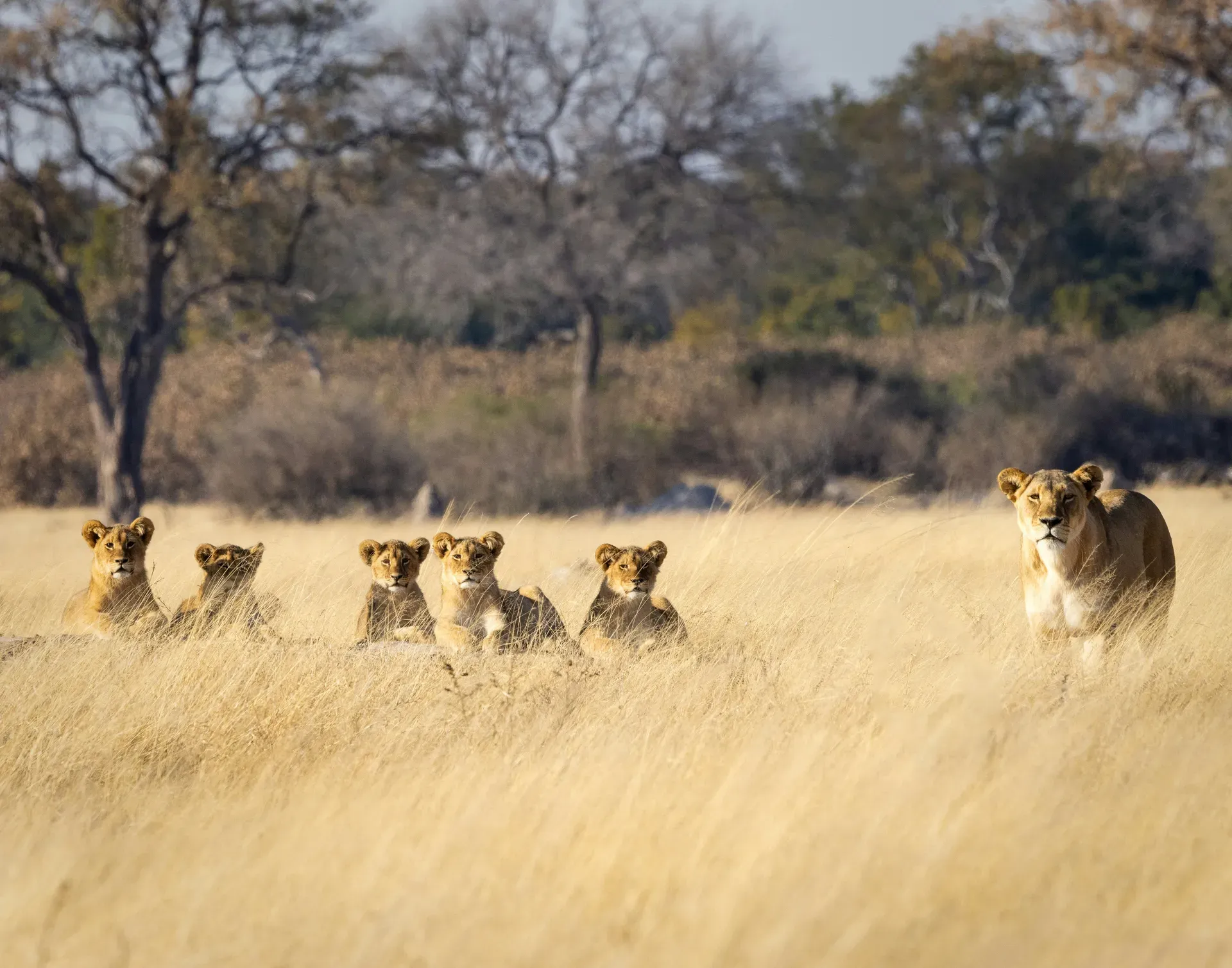
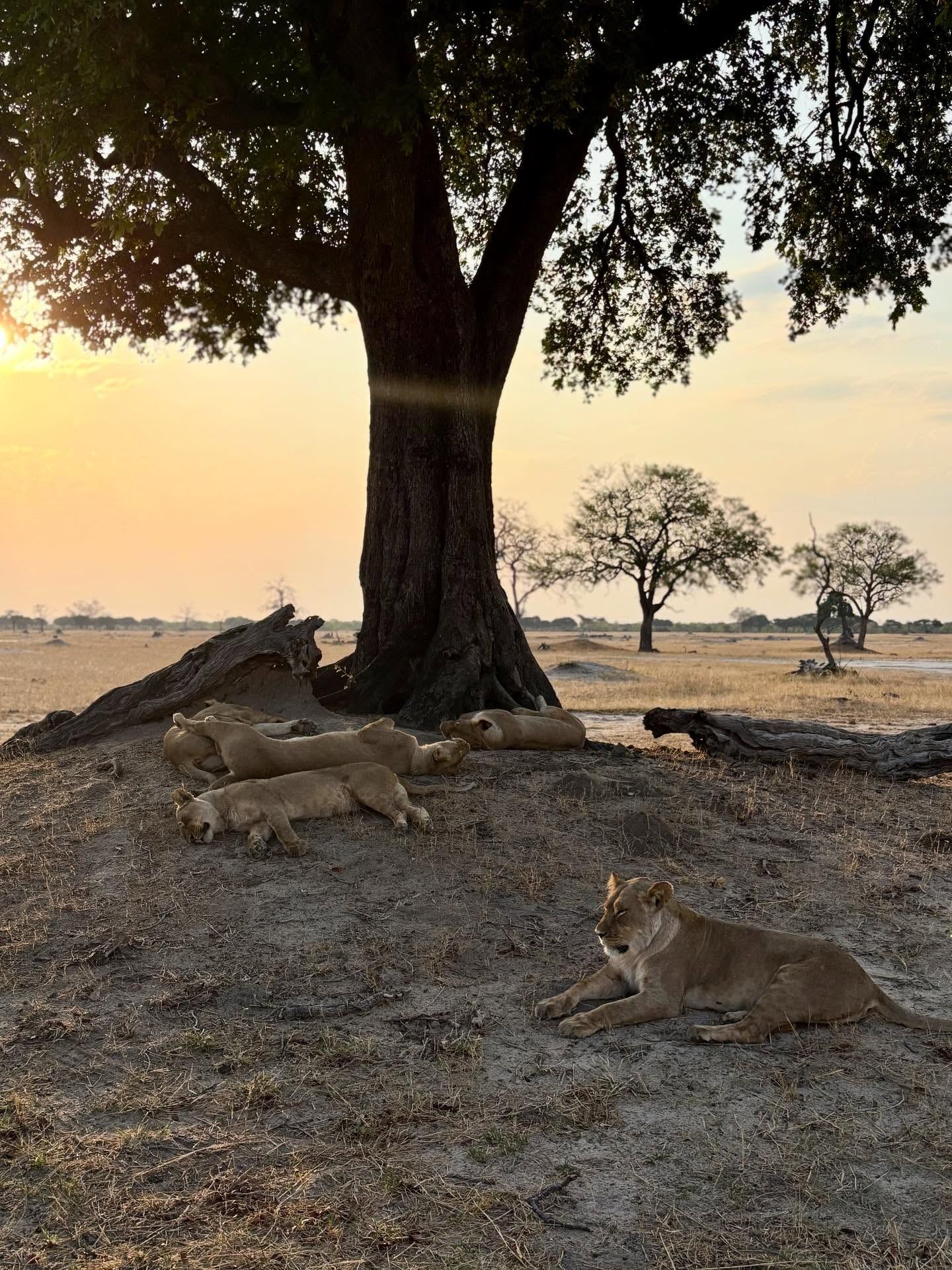
Elephants get the headlines, but the park records over 100 mammal species and nearly 400 birds. Lion prides here run up to 20 animals, leopard and cheetah patrol the thin dry-season bush, and one of Africa's largest surviving African wild dog populations dens here between June and August. Hwange is also the only protected area in Zimbabwe where you'll find gemsbok and brown hyena. One gap: there are effectively no rhinos, so four of the Big Five, not five.
You see it all from a vehicle, on foot with an armed ranger, or from a hide at the water's edge — Masuma Dam and Nyamandhlovu Pan are the classic spots, where herds come to drink within metres of you. Day trips from Victoria Falls are possible at three hours each way, but they miss the dawn and dusk hours when animals move. Three to five days is the relaxed minimum; six lets you split time between two camps in this huge park.
In 1928 the Rhodesian government declared this stretch of Kalahari sand a game reserve, a move pushed through the Legislative Assembly by members such as Major W Boggie. It was called Wankie Game Reserve, after the coal-mining town nearby. For its first decades it sat quietly on the country's edge. Proclamation as a national park was formalised in 1959, according to ZimParks' own General Management Plan — though you'll still see 1949 and 1961 quoted in other sources.
After independence in 1980, the colonial name went. Wankie became Hwange, matching the renamed town, and the park carried Zimbabwe's wildlife through the political and economic turmoil of the decades that followed. Management never stopped. Rainfall here is low, so wildlife depends on a network of boreholes pumped at waterholes across the park — a system still running today, with support from the charity Friends of Hwange.
2011 brought the park into the five-nation Kavango-Zambezi Transfrontier Conservation Area, KAZA, which links protected land across Zimbabwe, Botswana, Zambia, Namibia and Angola. Two years later came the worst crime in its history. In October 2013 poachers laced waterholes with cyanide; a first aerial survey counted 19 elephant carcasses, a second found 84 more. It was called the largest illegal killing of animals in Southern Africa in 25 years.
Then, on about 1 July 2015, American trophy hunter Walter Palmer shot and killed Cecil, a lion who had lived in the park for 13 years. The outrage was immediate and worldwide, and it forced trophy hunting onto front pages everywhere. Zimbabwe's answer was concrete: elephant and royal-game poaching offences now carry a mandatory nine-year prison sentence.
Hwange now operates under a General Management Plan that names its carnivores, elephants, pumped pans, and archaeological and cultural sites as exceptional resource values, and it anchors the Hwange-Sanyati Biological Corridor. The waterholes are still pumped. The lions are still here.
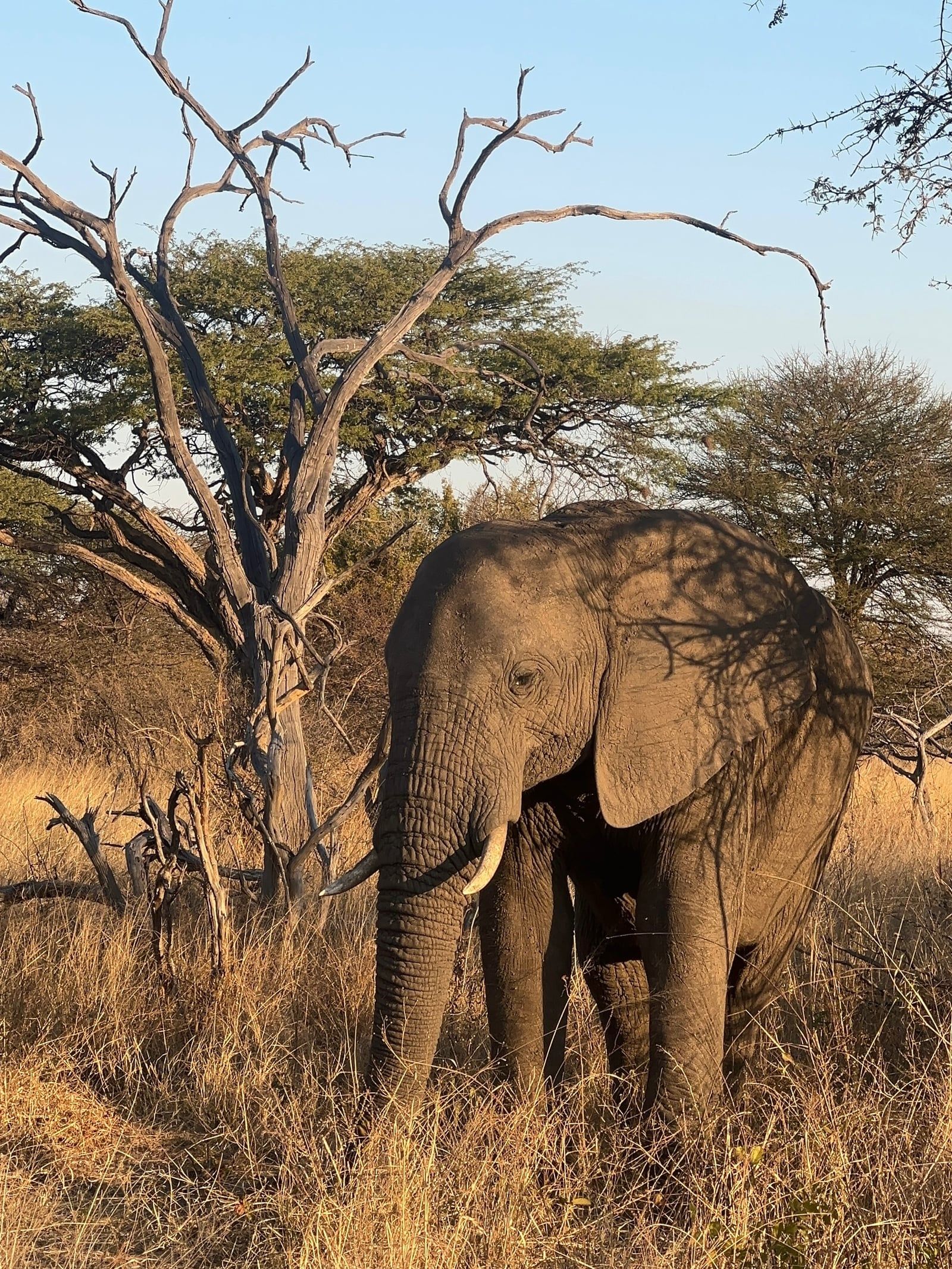
The park sits at the southern edge of the Kalahari, on deep sandy soils that look much like neighbouring Botswana's. Zambezi teak, sand camwood and Kalahari bauhinia woodland cover much of the ground; mopane dominates the north and north-west, and seasonal wetlands called vleis break the tree cover with grassland. Rainfall is too low to carry wildlife through the dry months, so a network of pumped boreholes keeps the pans filled. Without those pumps, the July-to-October elephant concentrations simply couldn't happen.
The scale is the other defining feature. Hwange stretches across 14,651 km² — the park's own GIS reads 14,710 — between 18°30'S and 19°45'S, with two designated wilderness zones, Southern and Dzivanini, at its far reaches. Roads are dirt throughout and average speeds run 25–30 km/h, so crossing the park can eat most of a day. There's no fuel inside; fill up in Hwange town or Victoria Falls before you enter, and carry a jerry can for the long routes.
Wildlife is what the landscape delivers: over 100 mammal species and nearly 400 birds, including Kalahari-endemic species at the eastern edge of their range. Lion prides reach 20 animals, wild dogs den between June and August, and night drives in the private concessions turn up brown hyena, bat-eared fox and springhare. The best seats are fixed ones — a thatched hide at Masuma Dam and viewing platforms at Nyamandhlovu Pan, Ngweshla Pan and Dom Waterhole, where you sit at water level while herds come down to drink.
The park takes its name from a local Nhanzwa chief, and its meaning for the surrounding communities is practical before it is anything else. In Dete, a few kilometres from the Main Camp gate, the Painted Dog Conservation Visitor Centre runs anti-poaching patrols, school programmes and rehabilitation for injured wild dogs — one of Zimbabwe's most successful conservation operations, and a guaranteed look at a species most drives miss. The charity Friends of Hwange, funded largely by former visitors, helps keep the pumped waterholes running that the park's wildlife depends on to survive the dry season.
Cecil changed how the world talks about lions. His death in 2015 triggered a global argument about trophy hunting, and in Zimbabwe it produced a mandatory nine-year sentence for elephant poaching — a law with his name attached in most people's minds. Inside the park itself, ZimParks' management plan lists archaeological and cultural sites among its exceptional resource values, and removing artifacts from them is a criminal offence.
Walking safaris, led by armed rangers recruited from local communities, are written into that same management plan as an integral part of the Hwange experience rather than a lodge add-on. For the people who live along its boundary, the park is employer, water steward and occasional problem — breeding elephant herds don't respect farm fences — all at once.
Up to 50,000 elephants move into Hwange during the dry season, roughly 10% of the entire continental population. Hundreds can gather at a single pumped waterhole in the midday heat of September and October.
Rainfall is too low to sustain the park's animals through the dry months, so a network of pumped boreholes keeps the pans filled. The charity Friends of Hwange helps fund the pumping that keeps tens of thousands of animals alive.
Cecil the lion was a 13-year Hwange resident when American trophy hunter Walter Palmer killed him on about 1 July 2015. The global outrage made him the world's most famous lion.
After the 2015 backlash, Zimbabwe imposed a mandatory nine-year prison sentence for elephant and royal-game poaching offences. The law followed the 2013 cyanide poisoning of waterholes that killed more than 100 elephants.
Hwange is the only protected area in Zimbabwe where gemsbok and brown hyena occur. It also holds one of Africa's largest surviving African wild dog populations.
The Bulawayo–Victoria Falls sleeper stops at Dete, the station nearest Main Camp, at around 04:00 on Fridays. Travellers report the economy fare costs about US$8.
There are no reliable filling stations in the park, and internal roads average 25–30 km/h. Self-drivers fill up in Hwange town or Victoria Falls and carry a jerry can for longer routes.
Yes. A standard sedan handles the tar road from Victoria Falls to Main Camp and the game-drive loops nearby, though potholes need care. A high-clearance 4WD is recommended for Sinamatella, Robins Camp and the southern region, and essential in the green season. There's no fuel inside the park, so fill up in Hwange town or Victoria Falls first.
It's about 200 km and roughly three hours' drive on a surfaced road, turning off the Bulawayo highway at Cross Mabale for the final 23 km to Main Camp. Road transfers and organised day safaris run daily from Victoria Falls town, and charter flights land at in-park airstrips with prior permission. There are no scheduled flights.
The dry season, especially July to October, when up to 50,000 elephants concentrate at the pumped waterholes. In September and October, hundreds can gather at a single pan in the midday heat. Stake out hides like Nyamandhlovu Pan and Masuma Dam at dawn and late afternoon if you're staying overnight.
It has four of the five: elephant, lion, leopard and buffalo, exactly as ZimParks lists them. Rhinos are very rare in the park, so don't come expecting all five. Travellers who want rhinos on foot usually pair Hwange with Matobo National Park near Bulawayo.
Under the 2026 ZimParks tariff, international day visitors pay US$24 per person per day and accommodated international guests pay US$12, plus US$10 per day for a foreign-registered vehicle. Camping runs US$23 per site per night for internationals, and exclusive picnic sites like Masuma cost US$235 per site per night for up to six people.
Yes — it's one of Africa's best-value parks for independent travellers, with an all-weather road network near Main Camp and affordable ZimParks chalets and campsites at Main, Sinamatella and Robins. You conduct your own game drives. Note that night drives are only permitted for lodges operating in private concessions.
There's a good chance: Hwange holds one of Africa's largest wild dog populations, and sightings improve during the June-to-August denning season and peak in July–October. If you strike out on drives, the Painted Dog Conservation Visitor Centre near Dete guarantees close views of the species year-round.
Day-visitor gates are currently listed as 08:00 to 16:30, while ZimParks' management plan notes 6am to 6:30pm in summer. Either way, driving inside the park is only allowed between official gate times, and driving after dark is prohibited. Arrive well before closing — latecomers risk being turned away.
Skip the rushed day trip from Victoria Falls, which spends up to three hours driving each way and misses the dawn and dusk game-viewing hours. A relaxed minimum is three to five days. With six or more, you can split time between two lodges or areas of this 14,651 km² park.
Yes, it's generally regarded as a safe safari destination, especially on lodge packages or organised tours. The real risks are wildlife-related — give breeding elephant herds wide berth and stay in your vehicle — and health-related, since malaria is present year-round. On the highway outside the park, avoid night driving: roads are unlit and pedestrians and livestock cross frequently.
Browse verified tours with free cancellation and instant confirmation.
Find Tours