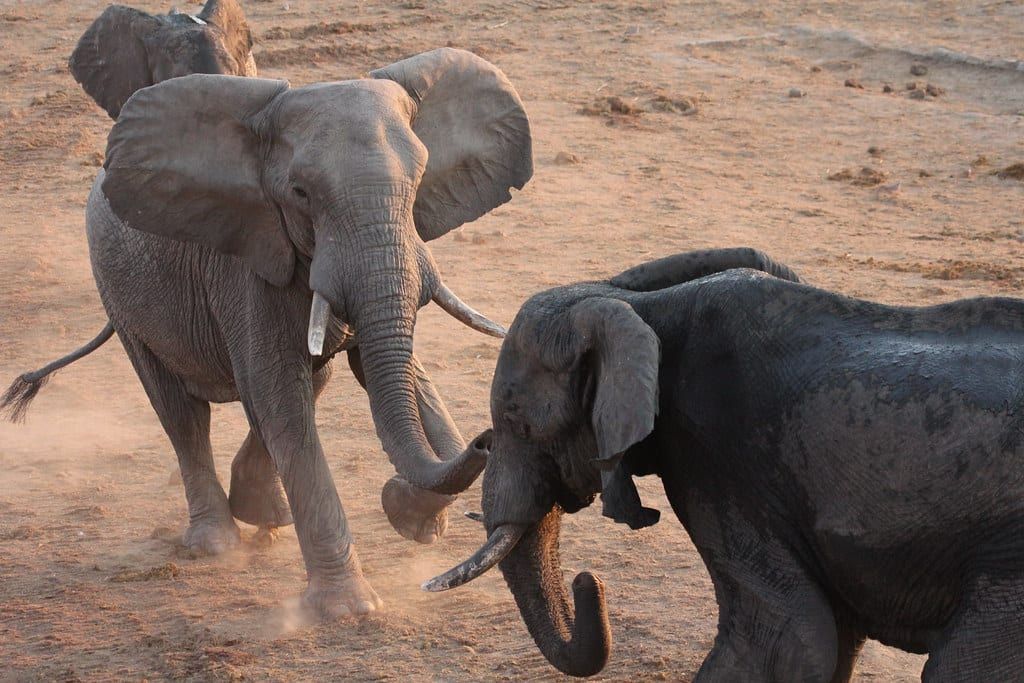
Hwange is Zimbabwe's largest park and its best safari value: 14,651 km² of Kalahari-edge bush sitting roughly halfway between Victoria Falls and Bulawayo, within easy reach of the falls by road. In the dry season, up to 50,000 elephants — about a tenth of Africa's entire population — crowd around its pumped waterholes, often hundreds at a single pan in the midday heat. Despite that game density, you can sit at a waterhole for an hour without another vehicle appearing. That combination of spectacle and quiet is what brings people back.
Most visitors pair Hwange with a few days at Victoria Falls, and that's the right way to do it: a waterfall first, then a proper wilderness. This guide covers what you'll see, when to go, what it costs, where to sleep, and the day-trip-versus-overnight question every Victoria Falls visitor ends up asking. If you'd rather skip the planning, guided safari tours handle the logistics end to end.
Why Go on Safari in Hwange National Park?
The park began as a royal hunting ground for the 19th-century Ndebele king Mzilikazi Khumalo, became a game reserve in 1928 — the oldest protected area in Zimbabwe — and was formalised as a national park in 1959. It sits on the eastern lip of the Kalahari: deep sandy soils in the south carry teak and Kalahari woodland, while mopane dominates the north. There is almost no natural surface water, so game viewing revolves around a network of borehole-fed waterholes kept running through the dry months. When the bush runs dry, the pumps decide where the animals go — and where you should sit.
Conservation here is not decoration. The 2013 cyanide poisoning of waterholes, which killed more than 100 elephants in Southern Africa's worst illegal killing in 25 years, and the 2015 death of Cecil the lion made Hwange's funding gaps obvious; elephant poaching now carries a mandatory nine-year prison sentence, and lodge revenue plus groups like Friends of Hwange pay for pump fuel and anti-poaching patrols. Your park fees and bed nights feed directly into that system.
Is Hwange right for you? Weigh it honestly:
- Upside: huge dry-season elephant gatherings, one of Africa's best wild dog populations, few vehicles, and Zimbabwe's famously rigorous guiding.
- Upside: genuinely affordable entry fees and self-drive options compared with Botswana or Kenya.
- Downside: internal roads have disintegrated — expect sand, potholes and 25-30 km/h average speeds.
- Downside: rhinos are effectively absent, so don't book expecting the full Big Five.
- Downside: August and September bring peak crowds and dust; October brings heat past 30°C.
Hwange Wildlife: What You'll See (and Where)
Over 100 mammal species and nearly 400 birds live here, but the honest headline is this: elephants, lions and buffalo are near-certain in the dry season; wild dogs are a strong chance; leopards and cheetahs are occasional; rhinos barely feature. Set expectations that way and Hwange will exceed them. For a deeper look at the herds, our guide to Hwange's elephants covers the seasonal movements.
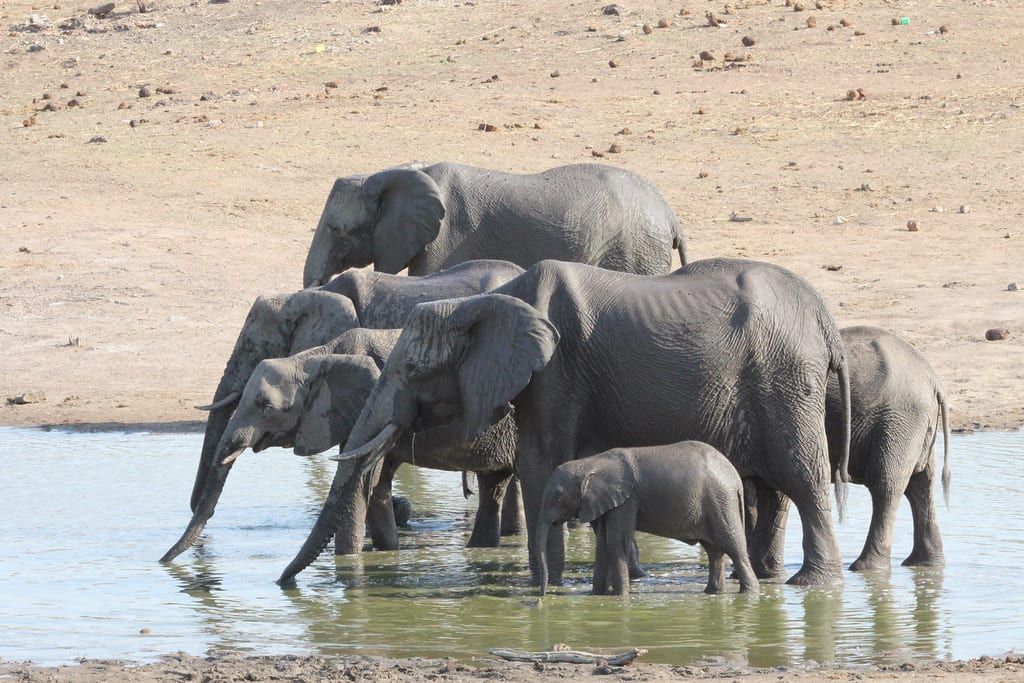
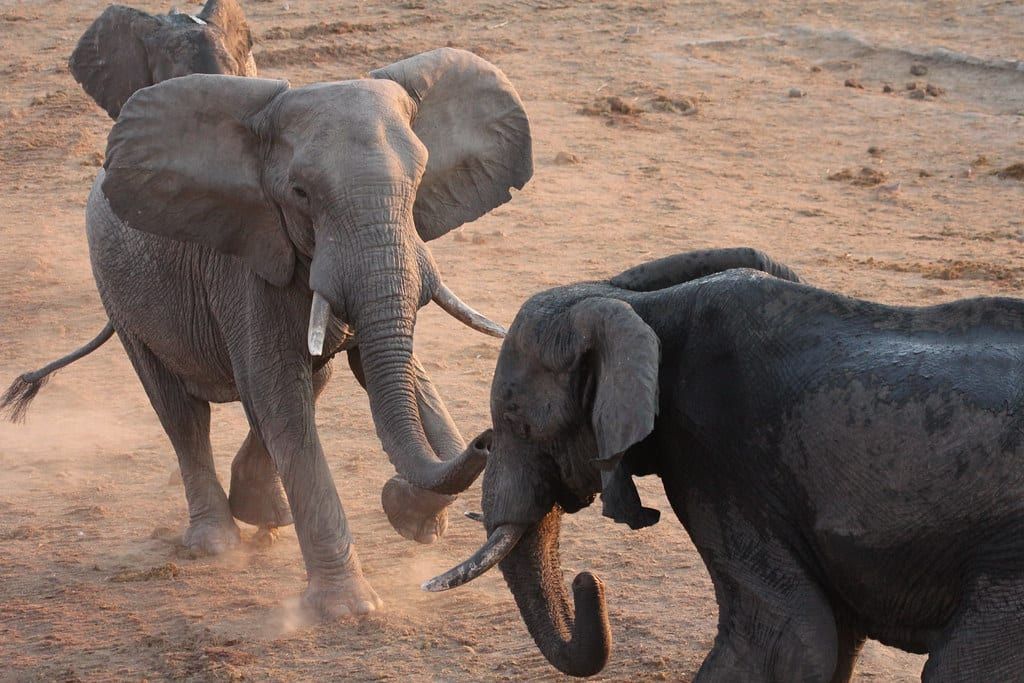
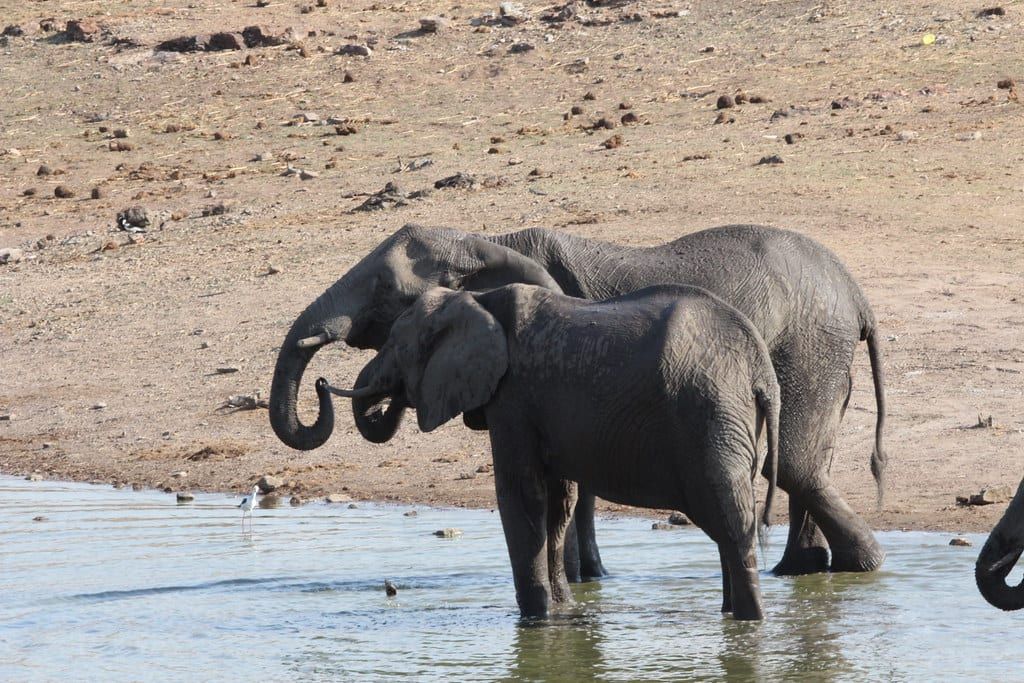
Elephants are the park's signature. From July to October, herds funnel toward the pumped pans from as far as Botswana and the Zambezi, and in September and October it's not unusual to count several hundred drinking, wallowing and jostling at one waterhole in the midday heat. The Nehimba and Kennedy areas, in the park's north, are the classic places to find them.
Predators are the second act. Hwange's lions include prides of up to 20 animals, and thin dry-season bush makes them easier to spot than in most parks. Leopards are present but shy; cheetahs show up occasionally. The real prize is the African wild dog — Hwange holds one of the largest surviving populations on the continent, and denning season between June and August concentrates sightings. Spotted hyena and black-backed jackal are common after dark.
Plains game runs from giraffe (Zimbabwe's best viewing), zebra and wildebeest to big buffalo herds and the sables and roans that southern Africa does better than anywhere. Brown hyena, aardvark, pangolin and porcupine are Kalahari-edge specials most visitors never clock — night drives from private concessions are your only realistic shot at them. Four of the Big Five occur; rhinos are so scarce that pairing Hwange with Matobo National Park near Bulawayo is the standard fix for rhino-watchers.
Positioning matters more than luck. Mandavu and Masuma dams in the northwest draw steady traffic, and Masuma has a thatched hide at the water's edge. Nyamandhlovu Pan in the southeast has an elevated viewing platform where elephant, buffalo and sable come to drink at dawn and late afternoon. Ngweshla and Dom waterholes and the Kennedy 1/2/3 pans round out the circuit. Book a hide at first light, then again from mid-afternoon; animals come to you while other vehicles chase them.
One guaranteed stop: the Painted Dog Conservation Centre just outside the park near Dete, on the A8 towards Main Camp gate. Resident rescued dogs and rehabilitation pens mean you'll see the species up close even if drives draw a blank, and the entry fee funds anti-poaching units and school programmes.
Best Time for a Hwange Safari: Dry Season vs Green Season
Go in the dry season if game viewing is the point of your trip. May through October brings minimal rain, thinning grass, and animals forced to the waterholes; July to October is the peak, with days around 25-32°C and cold nights down to 4-6°C in August. September and October are the prime elephant months as herds crowd the pumped pans, though October pushes past 30°C and the dust is thick by then. August and September are also the busiest months in the park. For a fuller breakdown by month, see our best time to visit Hwange guide.
The green season, November to March, inverts every trade-off. Rain averages around 44mm a month, the bush turns lush, migratory birds arrive — carmine bee-eaters, European rollers — and newborn antelope appear, all at the lowest rates of the year and with the park almost to yourself. But wildlife disperses away from the waterholes, thick vegetation hides everything, some roads become impassable, and a good number of lodges close January to March. Malaria risk also peaks in these months; the dry season carries the lowest risk.
| Months | Verdict | What to expect |
|---|---|---|
| May-Jun | Good | Dry, thinning bush, cold nights; shoulder rates and few crowds |
| Jul-Aug | Excellent | Animals at the waterholes; cold mornings; August is the busiest month |
| Sep-Oct | Excellent | Peak elephant gatherings at the pans; hot, dusty, busy |
| Nov | Good | Hot; first rains possible; game still concentrated; quiet and cheap |
| Dec-Mar | Fair | Lush scenery, babies, migrants; roads difficult, some camps closed |
So which to book? First-timers and photographers: July to October, accepting the crowds. Birders and budget travellers: November to March, with a 4x4 and flexibility. Everyone else: June or November, when you keep most of the game viewing and lose most of the price.
Safari Experiences: Game Drives, Walks, Hides & Night Drives
A day on safari starts before dawn: hot tea, a quick breakfast, then out at first light when predators are still moving. You return for lunch and a siesta, head out again mid-afternoon, and — if your camp has a concession — go again after dark with a spotlight. Camps differ on whether you take full-day outings or split drives; either works, but don't skip the dawn session. That's when Hwange delivers.
Game drives happen in open 4x4s. Expect winter mornings that feel anything but African: 4-6°C at an August dawn, so pack a fleece, beanie and gloves for what is technically a tropical country. By October the same vehicle is a furnace by 9am. Your guide reads tracks, dung and birds while you watch, and the difference between a good drive and a great one is almost always the person holding the radio.
Zimbabwe takes guiding more seriously than anywhere else on the continent. Guides must be Zimbabwean and pass one of Africa's hardest professional exams — the walking-safari licence above that is harder still. It shows: Hwange guides track on foot, identify calls, and brief you properly. This is a real reason to choose the park over its neighbours.
Walking safaris with an armed professional guide run best June to October, when thin bush makes tracking safer and sightings cleaner. Night drives — for civet, springhare, brown hyena and the bat-eared fox — and off-vehicle walking are permitted only in private concessions, not the public park, which matters when you pick accommodation. Photographic hides at waterholes, including log-pile and underground setups at some camps, put you at eye level with drinking herds. Horseback safaris and visits to local schools and villages round out the options.
Getting to Hwange — and Is a Day Trip from Victoria Falls Enough?
Most people arrive from Victoria Falls: about 200 km on a surfaced road to Main Camp, roughly 3 hours in any vehicle, watching for potholes and trucks. Road transfers to camps deeper in the park run longer. There are no scheduled flights into Hwange — charters from Victoria Falls International Airport take 25-60 minutes and land at the Main Camp and Robins airstrips with prior permission — and an overnight sleeper train runs from Bulawayo on Fridays, reaching Dete station (the nearest to Main Camp) around 4am for an economy fare near US$8. For full route details, see our how to get to Hwange guide.
Self-drivers enter through Main Camp, Mbala or Nantwich gates, each serving a different cluster of lodges and regions — Main Camp for the east, Mbala for the Dete side, Robins and Sinamatella for the northwest. A sedan copes with the tar to Main Camp and the nearby loops; anything further wants a high-clearance 4x4.
Now the question every Victoria Falls visitor asks. A day trip costs roughly US$270-350 per person all-in — transfers, morning and afternoon drives, lunch, guide and fees — and eats up to three hours of driving each way. You miss dawn and dusk, the two hours when Hwange is at its best, and you'll see a slice of a park the size of a small country. Book a day trip only if Hwange is your sole safari chance; overnight tours from Victoria Falls start at similar daily rates and give you the waterholes at first light. Three to five nights is the relaxed minimum — enough to settle into the rhythm and find the rarer animals. Six or more lets you split time between two camps in different regions.
Hwange also slots neatly into a wider circuit. Victoria Falls is three hours away, Chobe in Botswana about 1.5 hours beyond the falls town, and Matobo Hills and Mana Pools sit within Zimbabwe itself. For the Vic Falls visitor choosing between the two big parks, here's the short version — and our full Hwange vs Chobe comparison goes deeper.
| Hwange National Park | Chobe National Park | |
|---|---|---|
| Access from Vic Falls | ~3 hours from Victoria Falls by road | ~1.5 hours from Victoria Falls (Kasane) |
| Feel | Vast, uncrowded wilderness; few vehicles | Busy riverfront with many boats and vehicles |
| Signature activity | Game drives, guided walks, night drives, waterhole hides | River cruises past elephant and buffalo herds, plus drives |
| Elephants | Up to 50,000 in dry season; big waterhole gatherings | Large riverfront herds, easily seen from boats |
| Best for | A proper multi-night safari (3-5 nights) | A short add-on of 1-2 nights |
Where to Stay: Lodges, Concessions and Self-Catering Camps
Choose your bed before anything else, because it determines your safari. There are three ways to stay, and they are not interchangeable.
Private concession camps sit on land within or bordering the park where night drives, walking safaris and photographic hides are permitted. This is where Somalisa Acacia (family-friendly, on an acacia-fringed floodplain), Little Makalolo (six tents over a busy waterhole, with a log-pile hide), The Hide (ten tents and underground hides) and the top-end Linkwasha and Nehimba camps operate. Rates typically include drives, walks, a professional guide, all meals and often park fees. Pick a concession camp if walks and night drives matter to you.
In-park state camps — Main Camp, Sinamatella and Robins, run by ZimParks — are the affordable route: self-catering chalets from around US$35 and campsites at US$23 per site per night for internationals. Facilities are simple, with small grocery shops, restaurants and filling stations that cannot be relied on, so bring your own food, water and fuel. You give up guided activities and gain independence at a fraction of the price.
Location logic: the south-central Linkwasha area has the highest game density; Nehimba and Camp Hwange cover the elephant-heavy north; Robins and Sinamatella serve the quieter northwest; Main Camp anchors the east, closest to Victoria Falls. Mid-range options like Bomani and Elephant's Eye bridge the gap between state camps and the luxury tier. Photographers should prioritise waterhole-facing camps with hides; families will find age policies vary by camp, so confirm before booking. Green-season discounts of 30-40% at private camps are common — ask. Our Hwange accommodation guide has the full rundown.
What a Hwange Safari Costs: Park Fees, Packages and Budgeting
Park fees are set by ZimParks and charged per 24 hours. Under the current gazetted tariff, international day visitors pay US$24 per person per day (US$12 if you're staying accommodated inside the park), SADC citizens US$18, Zimbabweans US$5. Vehicles pay separately: US$10 per day for a foreign-registered car, US$5 local. Many concession lodges bundle conservation fees into the rate — check, because a five-night stay adds up to US$120 per person if it's not. Overnight picnic sites like Masuma and Ngweshla cost US$235 per site per night for up to six people. Current figures are on our hours and fees page.
On top of entry, here's the realistic envelope:
- Day trip from Victoria Falls: roughly US$270-350 per person all-in.
- Camping and mobile safaris: about US$200-300 per person per day; three-day Victoria Falls-plus-Hwange packages start near US$633.
- Upmarket lodges: roughly US$500-600+ per person per day.
- Six-night high-season fly-in lodge packages: about US$4,700-7,400 per person sharing.
Four things move the price: season (June-October high, December-March low), charter flights versus road transfers, concession versus state camp, and whether you take a private vehicle. Road-accessible camps from Victoria Falls keep costs down without costing you game — you spend three hours in a car instead of hundreds of dollars in a Cessna. For a top-tier safari destination, Hwange remains one of the more affordable options in Africa.
Self-Drive, Safety and Practical Safari Tips
Self-driving Hwange is entirely doable and one of the best-value safari formats in Africa, provided you prepare. The essentials:
- Enter at Main Camp, Mbala or Nantwich gate; a 4x4 is essential in the green season and for remote camps.
- Stay on designated roads — off-road driving is banned — and keep to the 40 km/h park limit.
- Fill up in Hwange town or Victoria Falls; there's no reliable fuel inside the park. Carry a jerry can.
- Navigate with Tracks4Africa offline maps; drop tyre pressure on deep sand.
- Have park fees ready in US dollars and be back at camp or out of the gate before closing.
- Take extra water, food and a satellite phone for the far corners.
Safety in the park comes down to animal conduct. Never leave the vehicle except at designated picnic sites, platforms and hides, and keep limbs inside. Give elephants — especially cows with calves, which ZimParks specifically flags — wide berth, keep your engine off and voice low at waterholes, and reverse slowly if one mock-charges. In camp, never walk from your tent at night unescorted. If you're ever confronted on foot, walk away, don't run. And never swim in park waters: hippos and crocodiles are the reason.
Health is straightforward. Hwange is a malaria zone year-round, with risk lowest in the dry season and highest November to March — take prophylaxis, use repellent, cover up at dawn and dusk. Yellow fever certification only applies if you're arriving from a risk country. Pack for both extremes: winter dawns near 4°C on an open vehicle, October afternoons past 30°C. Carry your passport, licence and vehicle papers — police checkpoints are routine on the Bulawayo-Victoria Falls road, and night driving on that highway is best avoided altogether.
Last advice: be patient, and put the camera down sometimes. The visitor who spends three quiet hours at Masuma's hide sees more than the one racing between pans. Ask your guide questions — you're paying for one of the best-trained guides in Africa — and allow more days than you think you need.
Frequently asked questions
Is a Hwange day trip from Victoria Falls worth it?
It's worth it only if Hwange is your sole safari option. Expect roughly three hours of driving each way and about US$270-350 per person all-in, and know that you'll miss the prime dawn and dusk game-viewing hours. Two or three nights delivers far more for the same transfer effort.
How many days do you need for a Hwange safari?
Two to three days works as a Zimbabwe add-on, but 3-5 nights is the relaxed minimum for a park of 14,651 km². A single day is far too little — the park is simply too big to cover.
Hwange or Chobe: which is better for a Victoria Falls safari?
Hwange gives you uncrowded wilderness, walking safaris, night drives and up to 50,000 dry-season elephants. Chobe gives you easy 1.5-hour access, river-cruise game viewing and a shorter trip. Chobe suits a quick add-on; Hwange suits a proper multi-night safari. Many visitors combine both by road.
How much does a Hwange safari cost?
Park entry is US$24 per international day visitor per day plus US$10 per foreign-registered vehicle under the current ZimParks tariff. Day trips run about US$270-350 per person; camping safaris about US$200-300 per person per day; six-night luxury fly-in packages about US$4,700-7,400 per person sharing.
When is the best time to visit Hwange National Park?
July to October, when animals crowd the pumped waterholes and the bush is thin. September and October are the peak elephant months. The green season (November to March) brings babies, migratory birds and low rates, but some camps close January to March.
Can you self-drive in Hwange National Park?
Yes. Enter at Main Camp, Mbala or Nantwich gates. A sedan handles the tar road to Main Camp and its nearby loops; a high-clearance 4x4 is needed for remote camps and essential in the green season. Stay on marked roads, use Tracks4Africa, and carry fuel, water and supplies — there's no reliable fuel inside the park.
Is Hwange safe? What about malaria?
Yes, with standard safari discipline: stay in your vehicle, keep limbs inside, never leave your tent at night unescorted, and never swim — hippos and crocodiles are present. Malaria risk is lowest in the dry season and highest November to March; a yellow fever certificate is only required if arriving from a risk country.
What animals will I see in Hwange?
Over 100 mammal and nearly 400 bird species: up to 50,000 elephants, lion prides of up to 20, leopard, cheetah, African wild dog, buffalo, giraffe, zebra and rare sable and roan antelope. Rhinos are very scarce, so don't count on the full Big Five.